
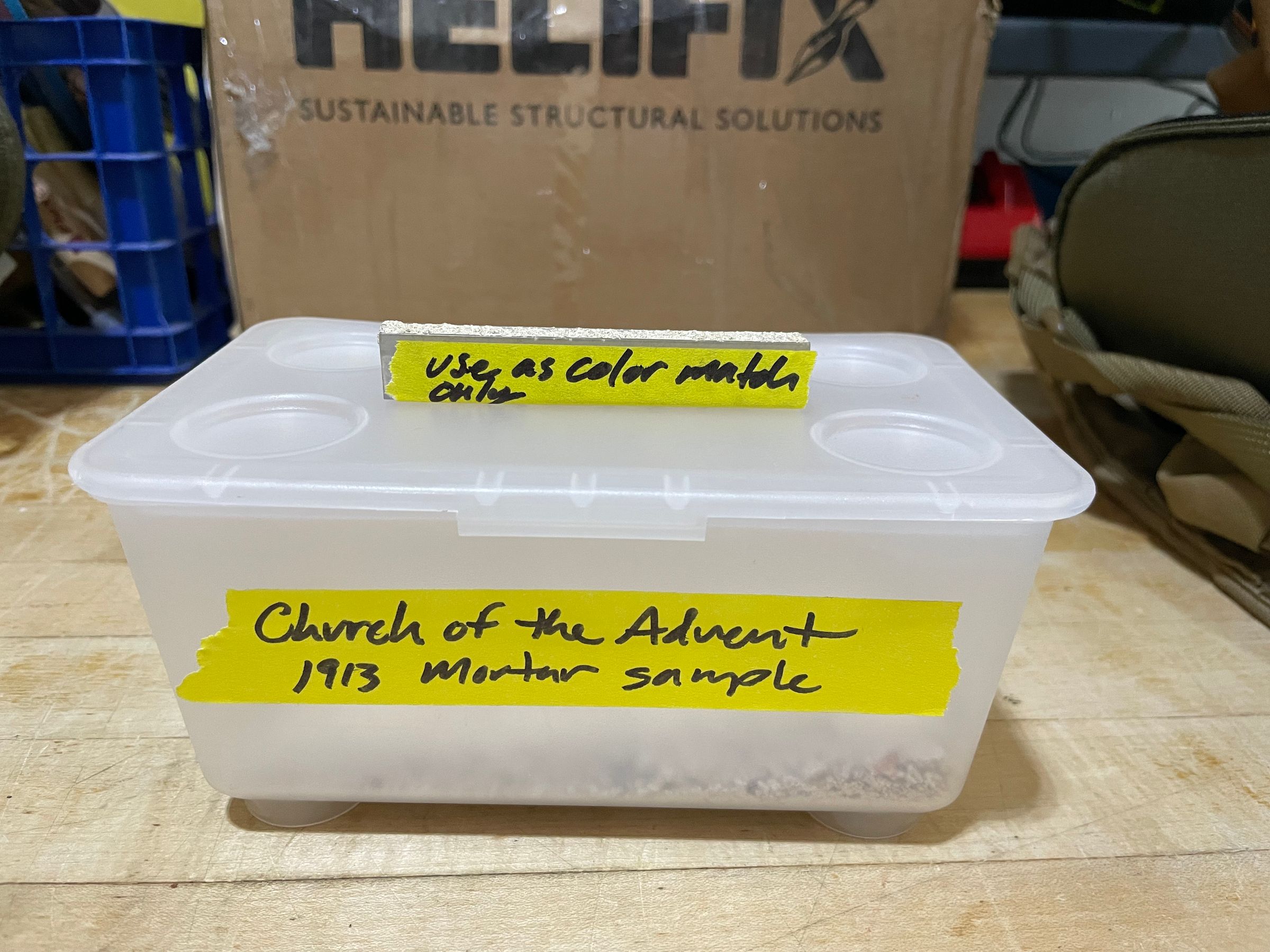
At Brick Repair Denver, accurate mortar analysis is crucial to preserving the integrity of the historic buildings we work on. Understanding the original mortar composition allows us to create a repointing mortar that matches not just visually but also in terms of strength, permeability, and compatibility with the masonry.
Color Mortar Matching for Tuckpointing and Repointing
Wet-Chemical Mortar Analysis Methods
One of the primary techniques we use is the wet-chemical method, specifically acid digestion. This process involves crushing a mortar sample and mixing it with a dilute acid. The acid dissolves carbonate-containing minerals from the binder and aggregate materials, leaving behind the sand and any acid-insoluble materials.
This method is efficient and relatively inexpensive. It helps us understand the texture and color of the sand, which is vital for achieving a good visual match with the existing mortar.
For more detailed information, we sometimes use variations of the acid digestion method that involve collecting the carbon dioxide gas released during the process. This allows us to accurately determine the carbonate content in the mortar, providing deeper insights into the binder composition.
Instrumental Mortar Analysis
For more complex projects, especially those involving historically significant structures, we employ instrumental analysis methods. These include polarized light or thin-section microscopy, scanning electron microscopy (SEM), atomic absorption spectroscopy (AAS), and X-ray diffraction (XRD). Among these, thin-section microscopy is commonly used.
By examining thin slices of mortar under transmitted light, we can detect specific aggregates like carbonate-based materials that are not fully revealed through chemical tests.
Although instrumental methods require specialized equipment and expertise, they provide comprehensive information about the original mortar composition. This is especially useful when dealing with complex historic mortars that include locally sourced materials or unconventional aggregates like crushed shells or natural cements.
The Challenge of Historic Mortars
One of the challenges in mortar analysis is the variability of historic materials. Unlike modern mortars, which follow specific standards, historic mortars were often mixed on-site using local materials. As a result, they can vary greatly from one building to another, even within the same region.
To address this, we combine both wet-chemical and instrumental analysis methods when needed. This approach gives us a clearer picture of the original materials used and helps us replicate the historic mortar as accurately as possible.
Why Mortar Analysis Matters
The goal of mortar analysis is to create a repointing mortar that is sympathetic to the original structure. If the new mortar is too hard, it can cause stress and damage the masonry. Conversely, if it's too soft or impermeable, moisture can build up and lead to issues like spalling or efflorescence. By understanding the original mortar, we ensure the new material supports the masonry rather than working against it.
Whether we're working on a century-old brick home in Denver or a Colorado historic landmark, our detailed mortar analysis ensures the longevity and aesthetic integrity of the buildings we restore.
Prefer to reach us another way? Visit our contact page.