
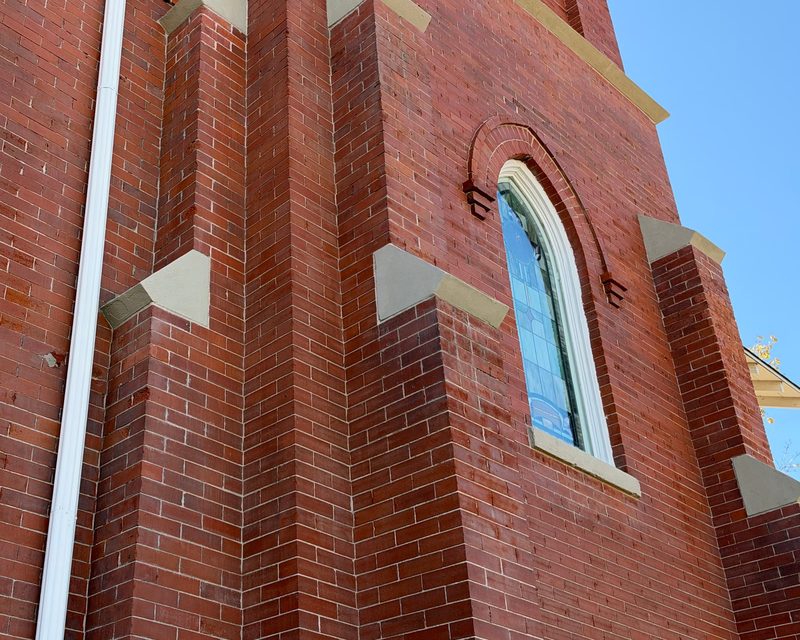
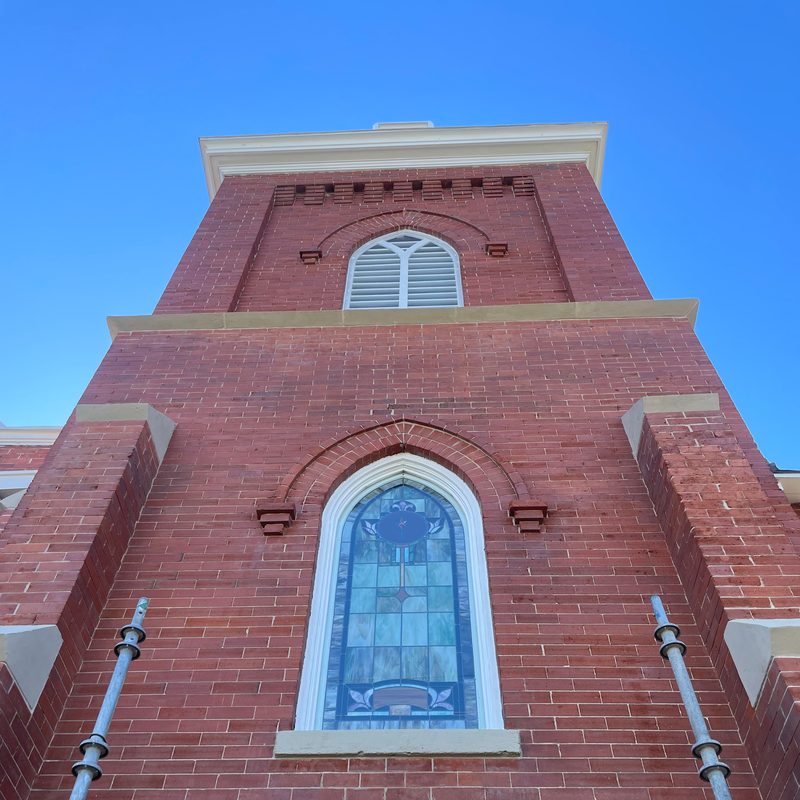
In 2025, Brick Repair Denver restored the Church of the Advent, a 1913 Denver Landmark in Villa Park. Before the restoration could start, there was a problem in the bell tower: a massive honeybee infestation high up in the tower, with visible swarms. This is how it got solved, told mostly in photos.
01 · The problem
A Bell Tower Full of Honeybees
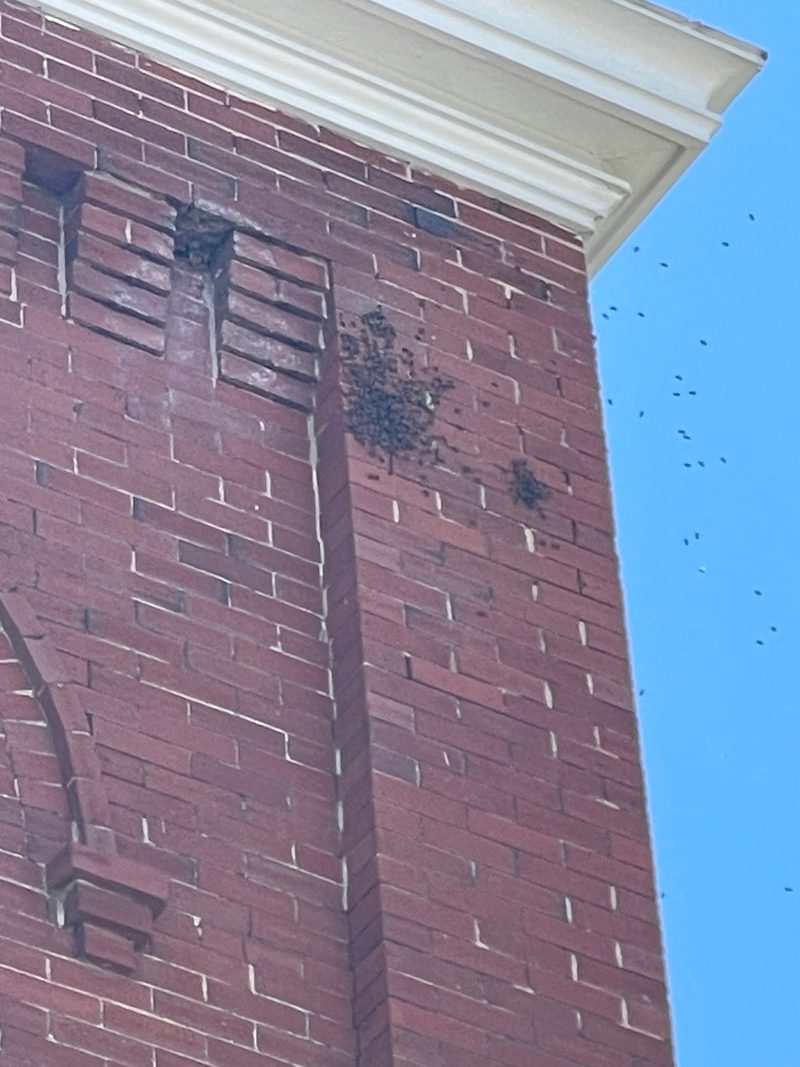
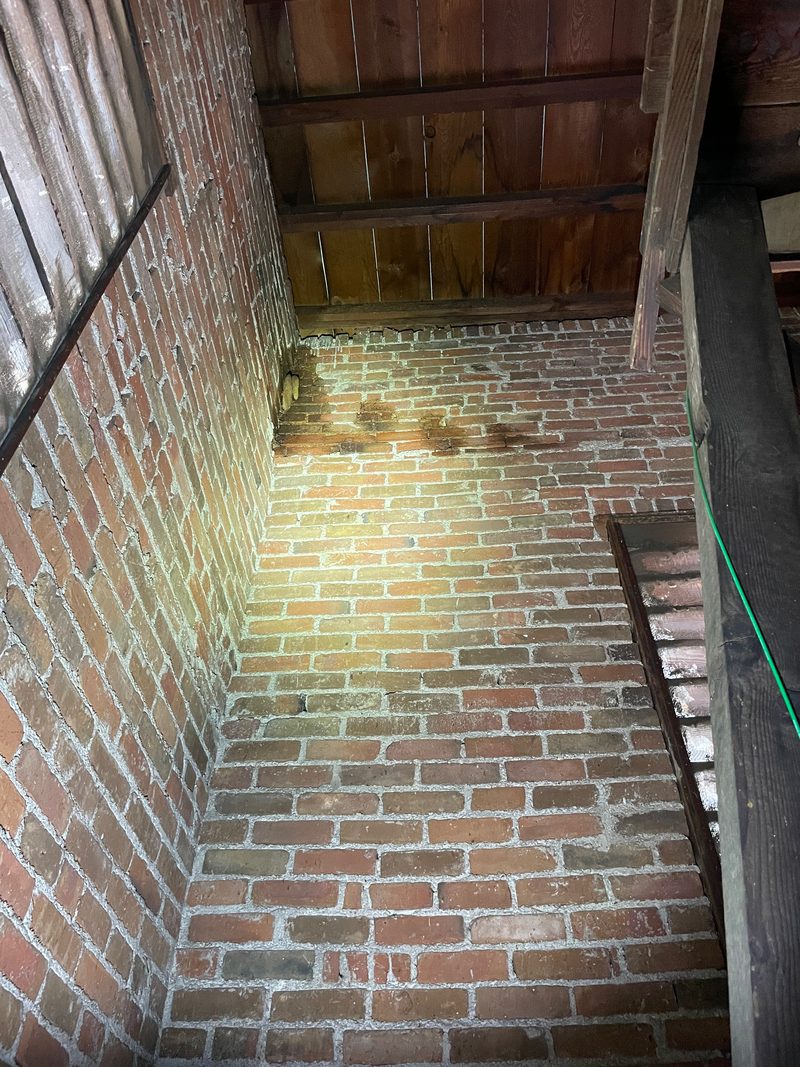
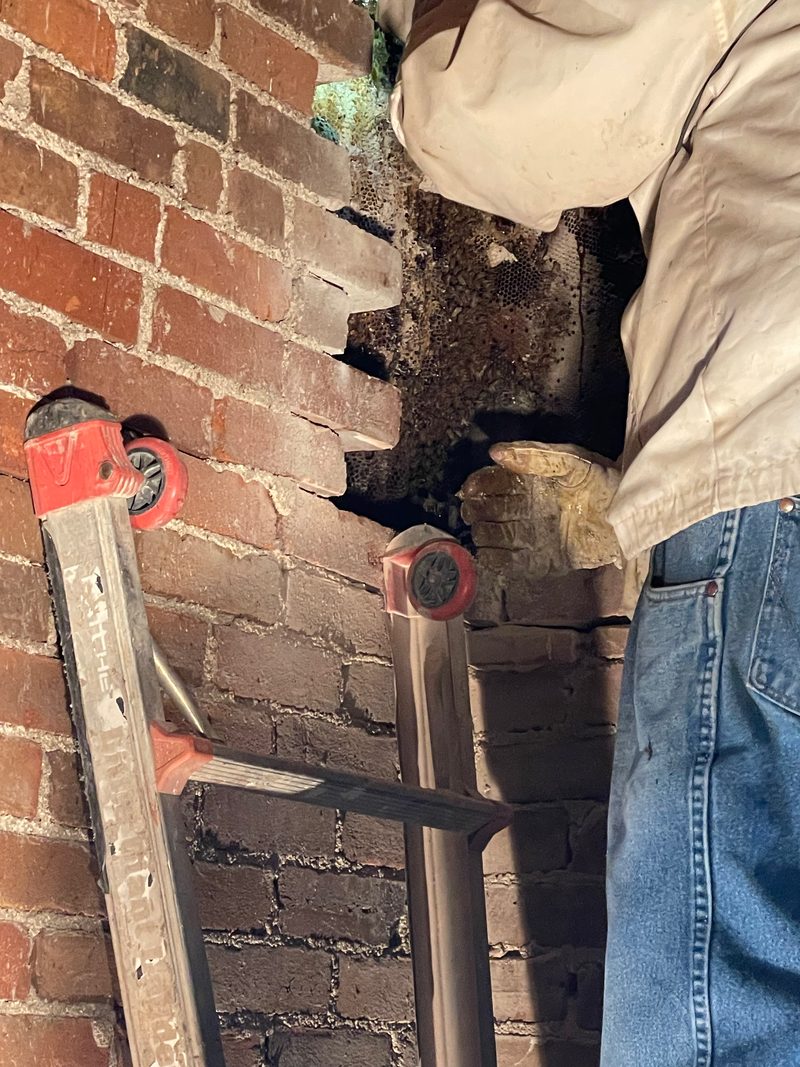
The bees were high up in the bell tower, and the swarms were easy to see. They had gotten in through open, failed mortar joints and built into the wall. They coated sections of the exterior brick with wax and honey. With a full masonry restoration about to start, we told the church the bees had to be dealt with before the scaffolding crews could put up scaffolding and our work could begin.
02 · Failed attempts
Why Pest Companies and Beekeepers Fell Through
Removing the bees was the church members' responsibility. It was not part of what we had been hired to do. The church tried exterminators and bee-removal people. Pest companies would not touch it because of the liability, and beekeepers who seemed interested never followed through. Meanwhile the bees were causing a real problem for the church and its brick, and it was coming down to simply exterminating them.
03 · Stepping in
Jesse Steps In: A Beekeeper and a Masonry Plan
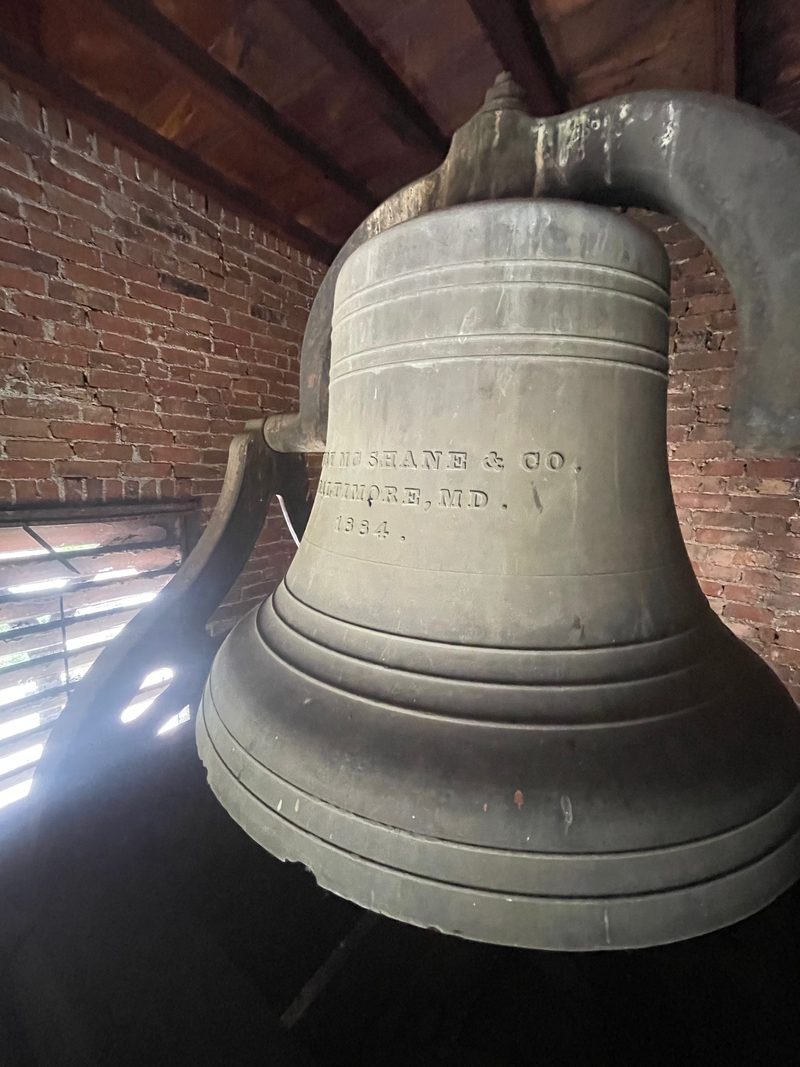
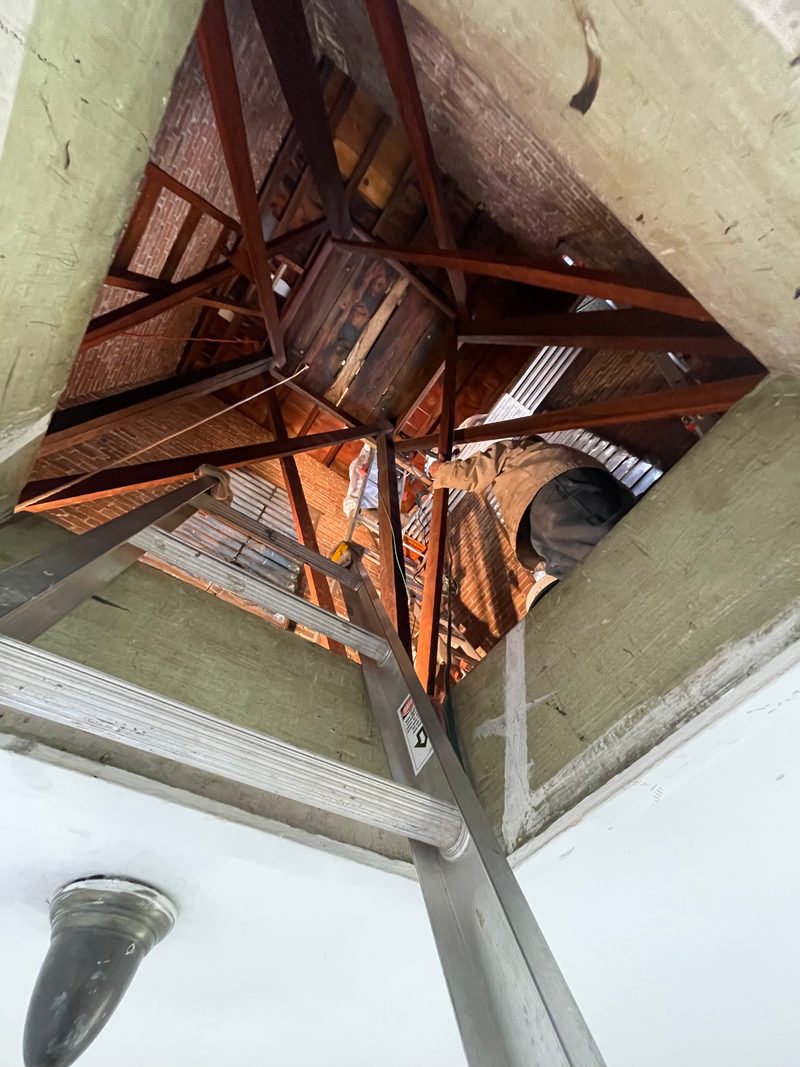
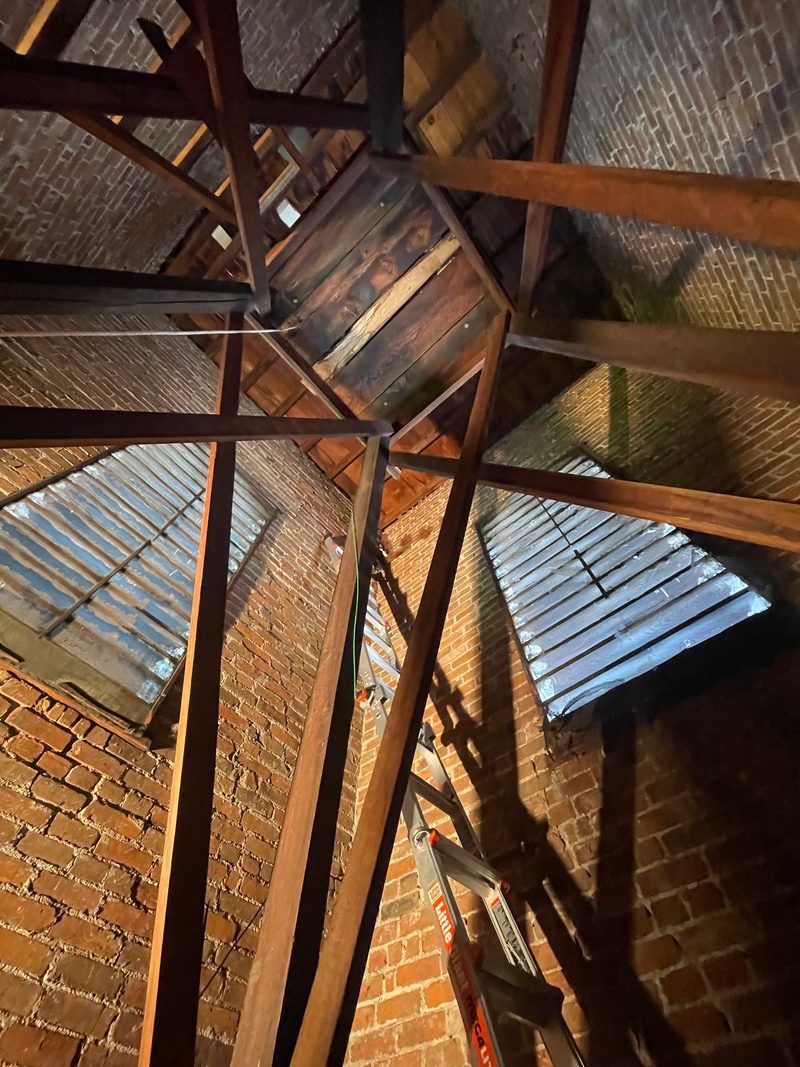
Instead of letting it end that way, our owner, Jesse Smith, stepped in. He reached out to Stuart Davis, "The Honeybee Whisperer," a beekeeper he knew from a project years earlier who still keeps bees, though not full time, and set up a meeting to get him on site. They looked up into the tower together, and it evolved from there. The plan: remove sections of brick high inside the bell tower, at the best access point to reach the hives.
04 · Opening the brick
Bee Suits On, Brick Out
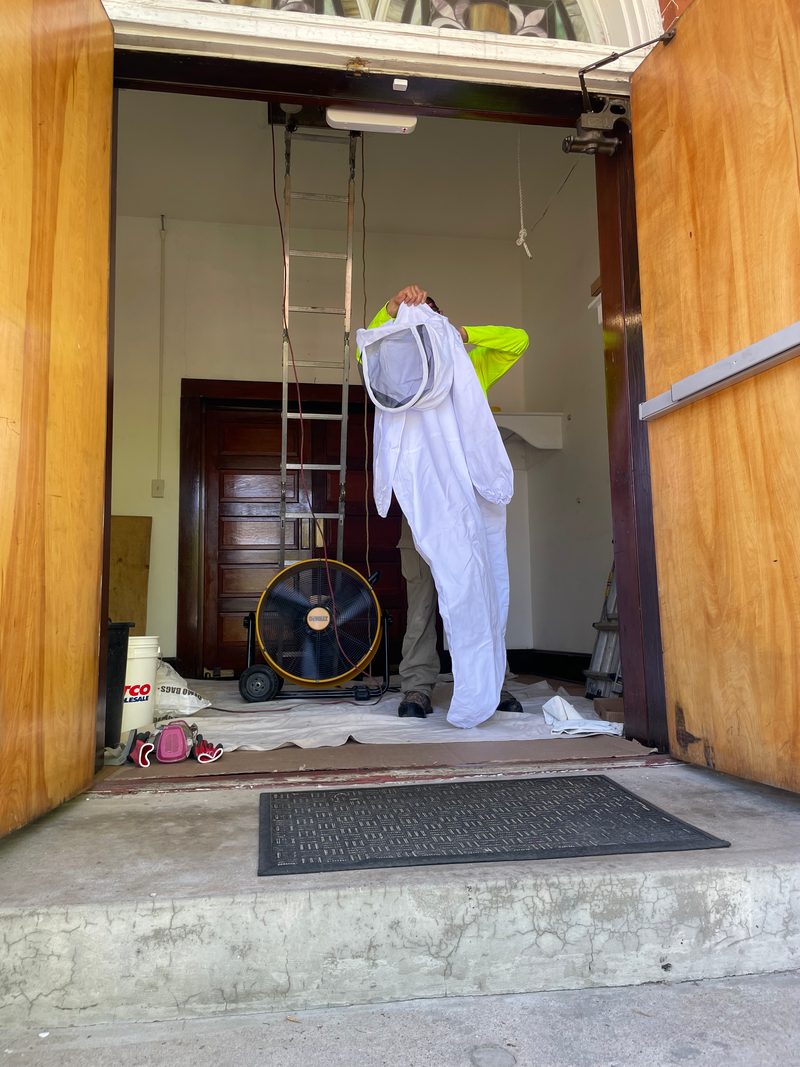
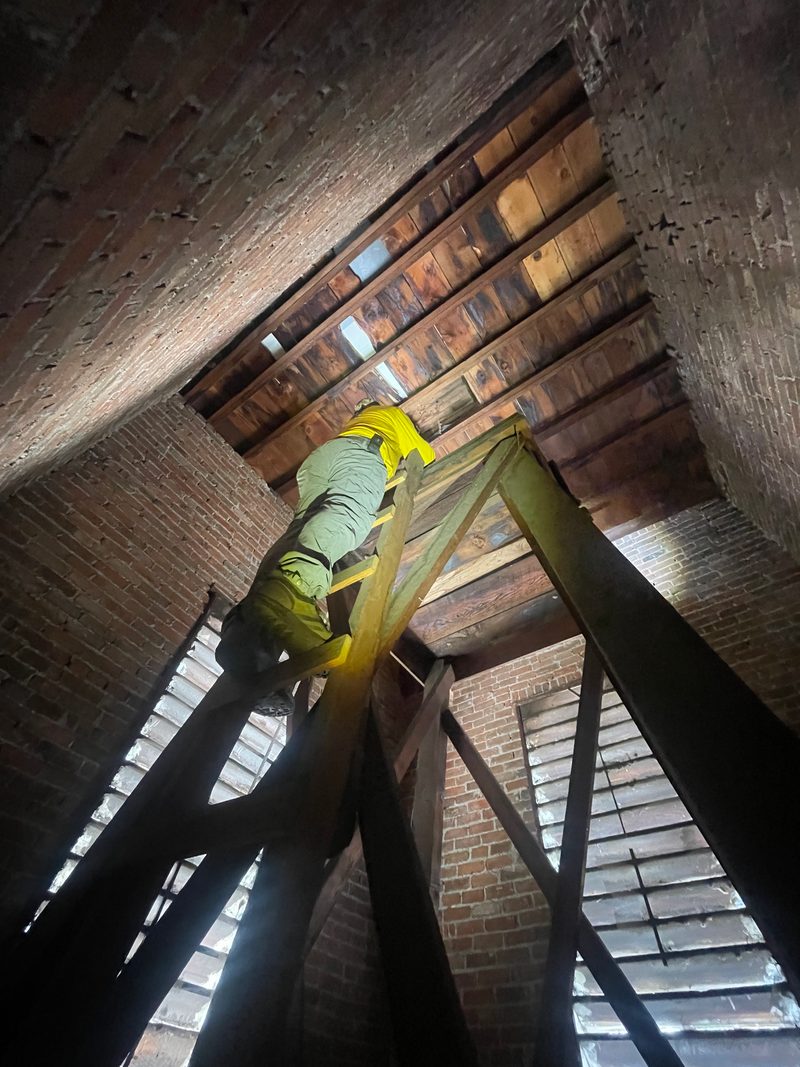
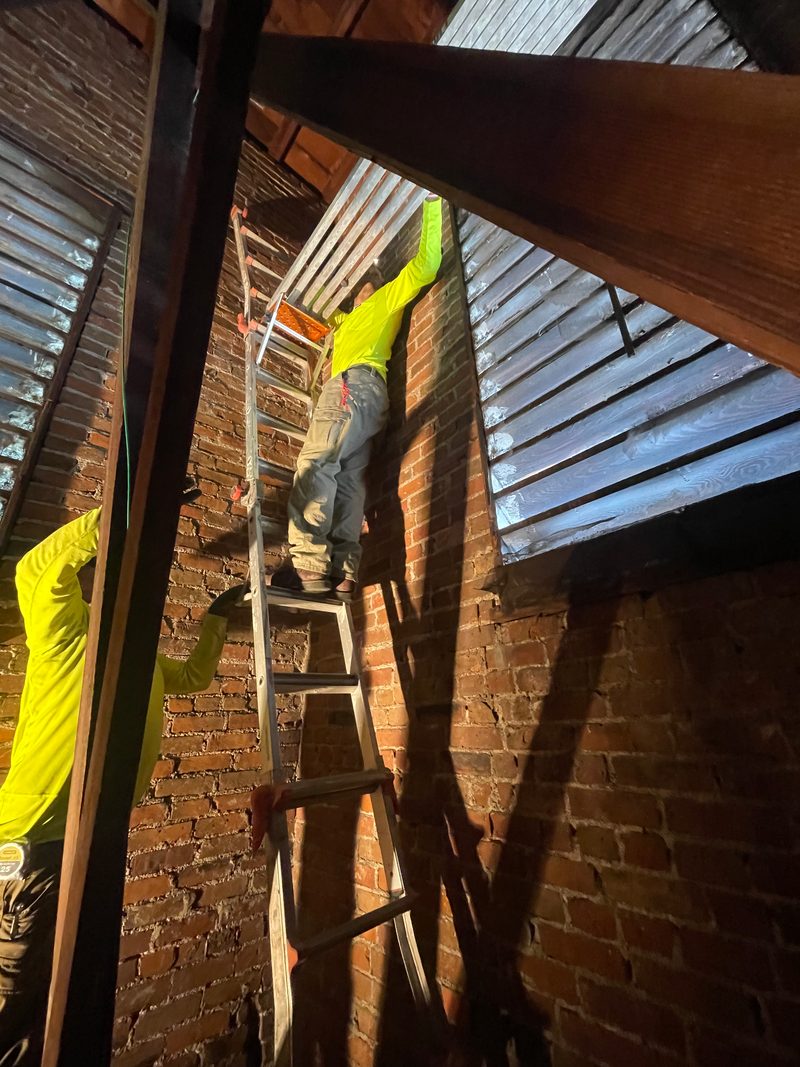
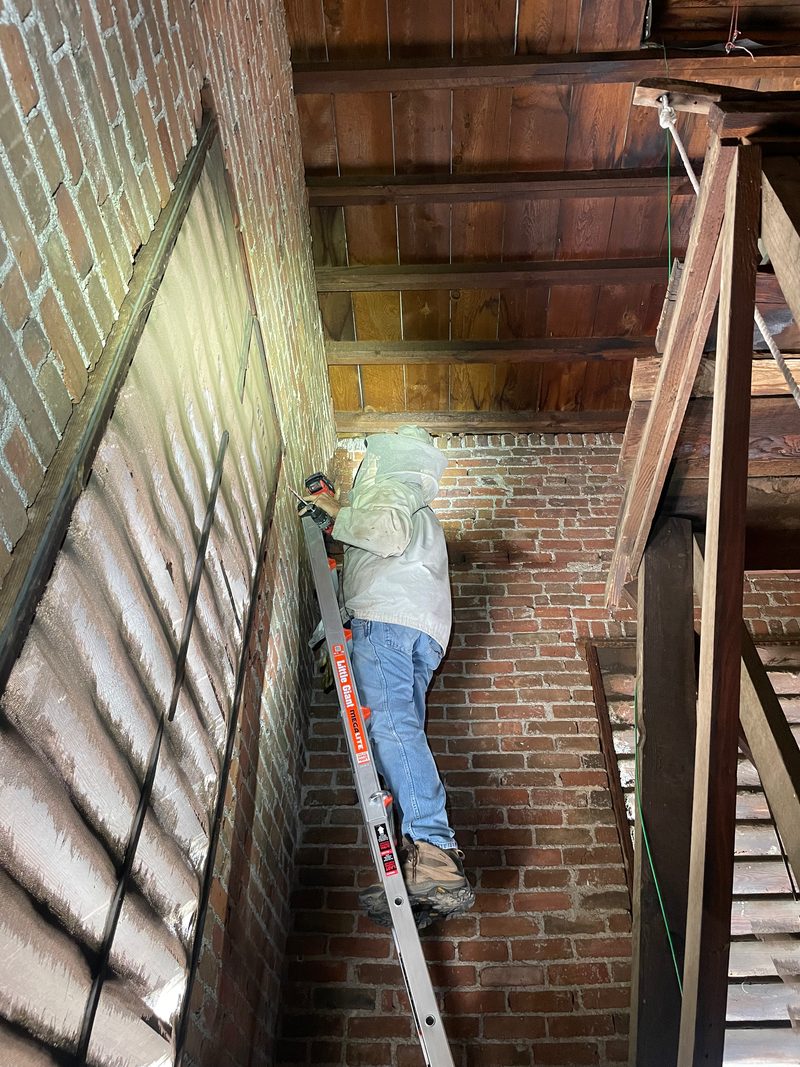
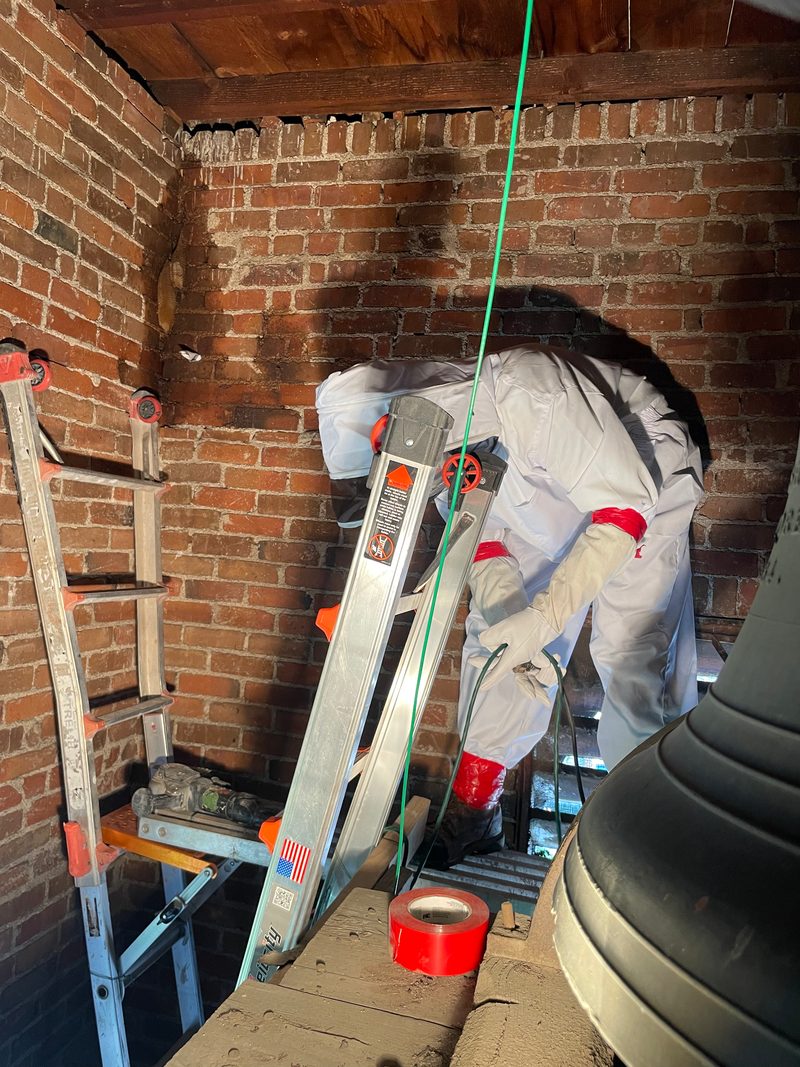
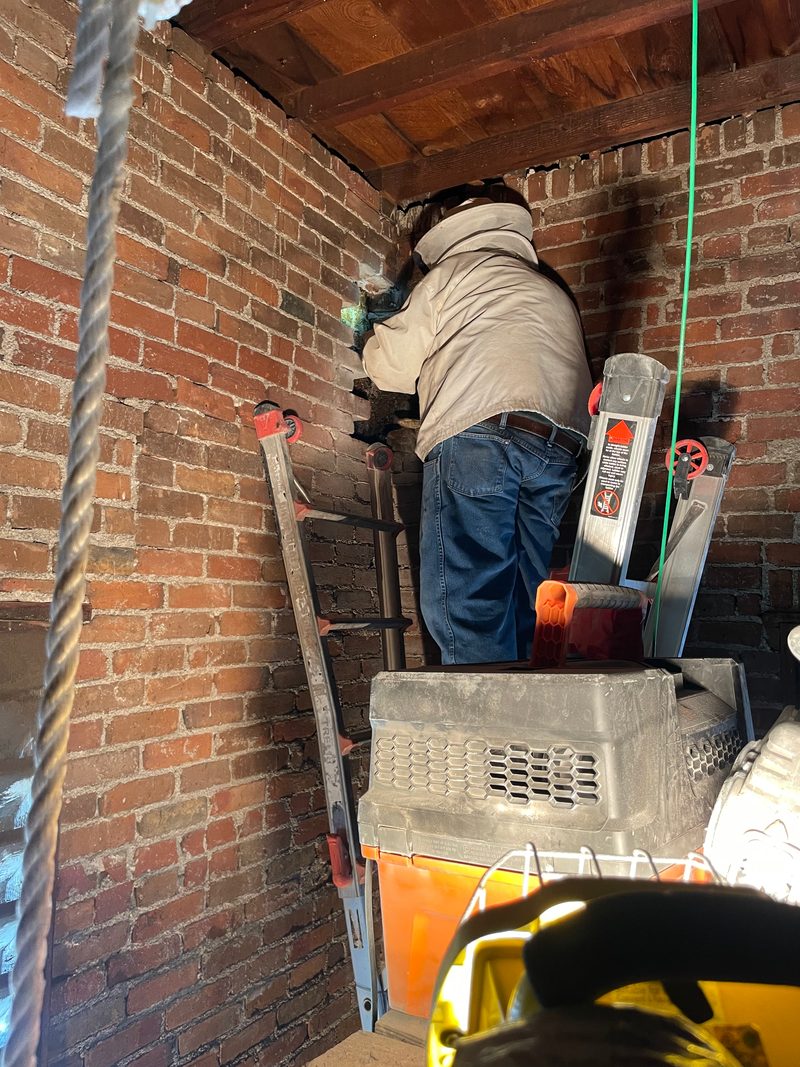
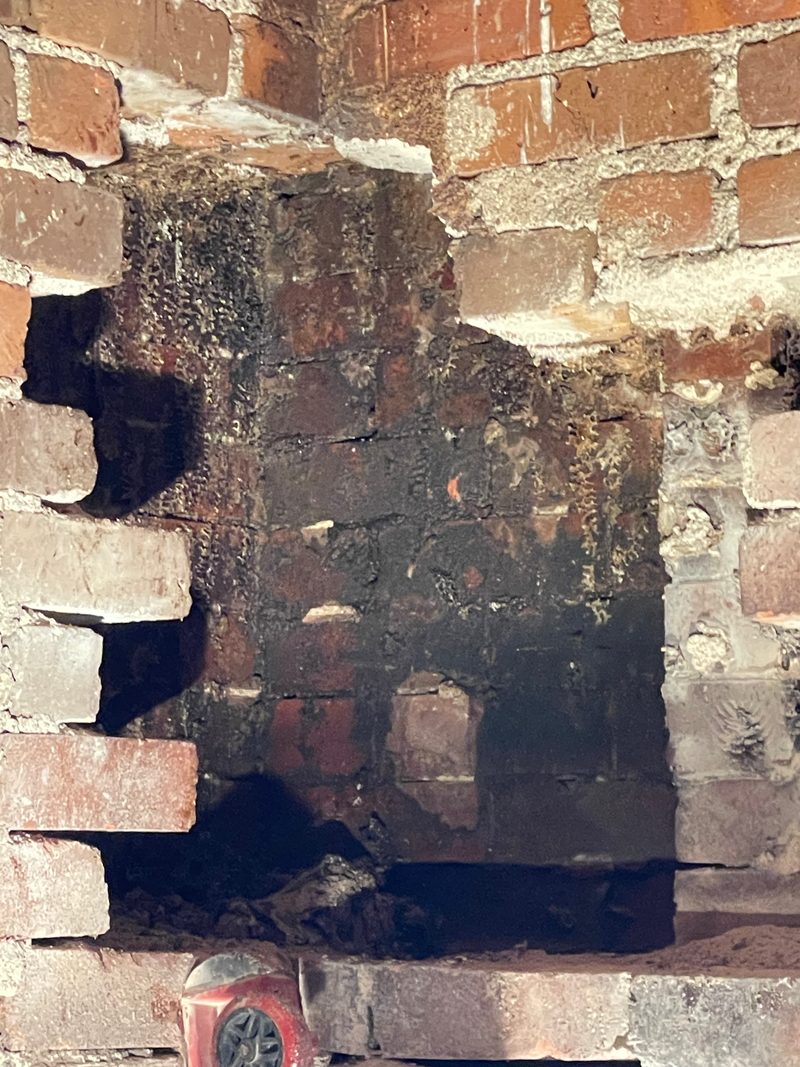
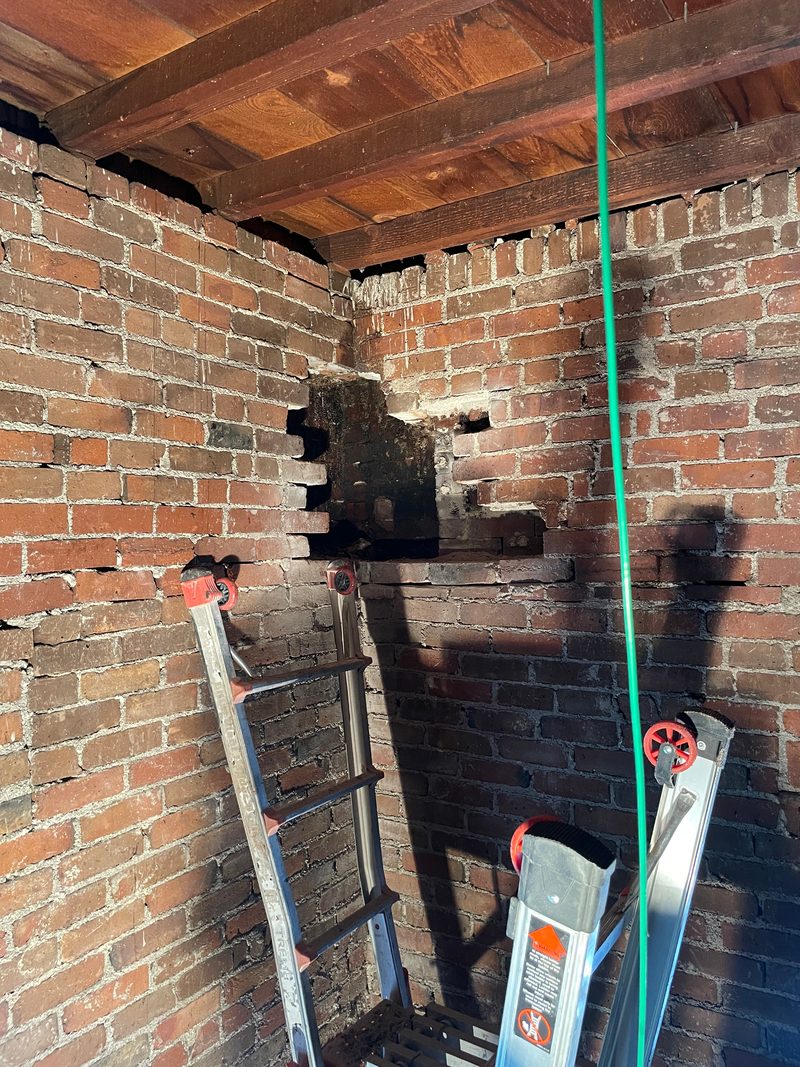
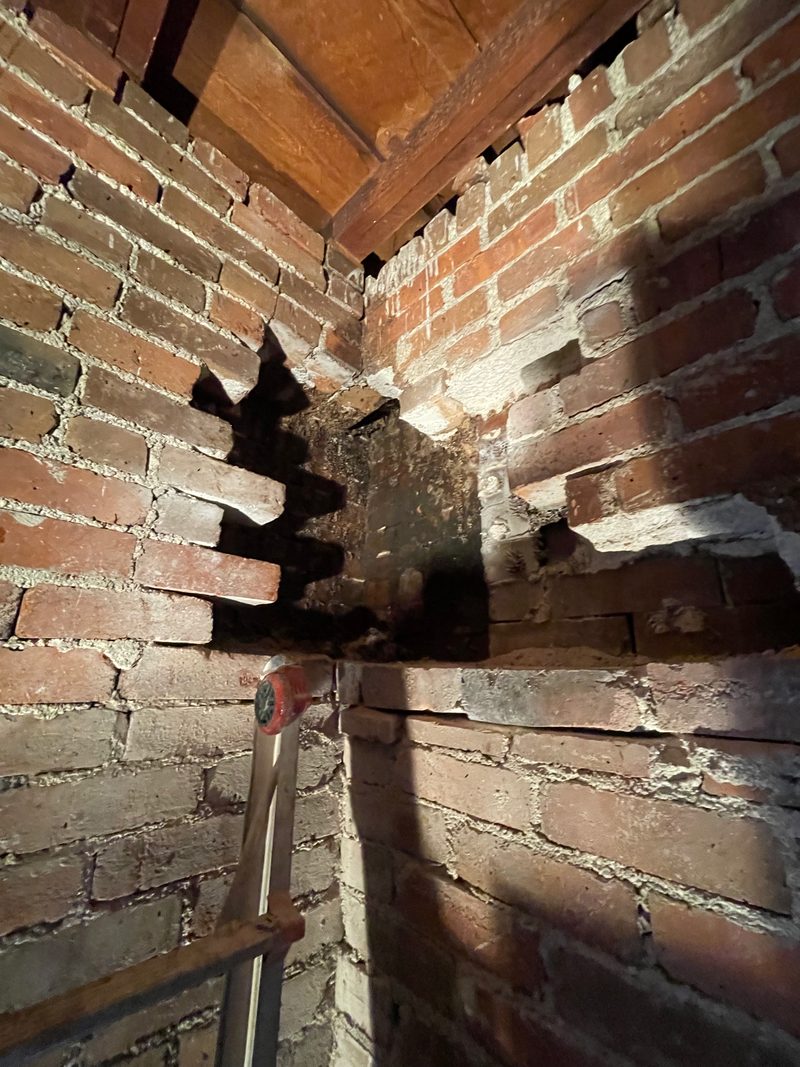
We arranged access inside the tower, and our own crew took out the brick. Suited up in bee suits, they opened the wall while Stuart stood by, ready for the bees.
05 · Saving the bees
Hives Out, Bees Relocated
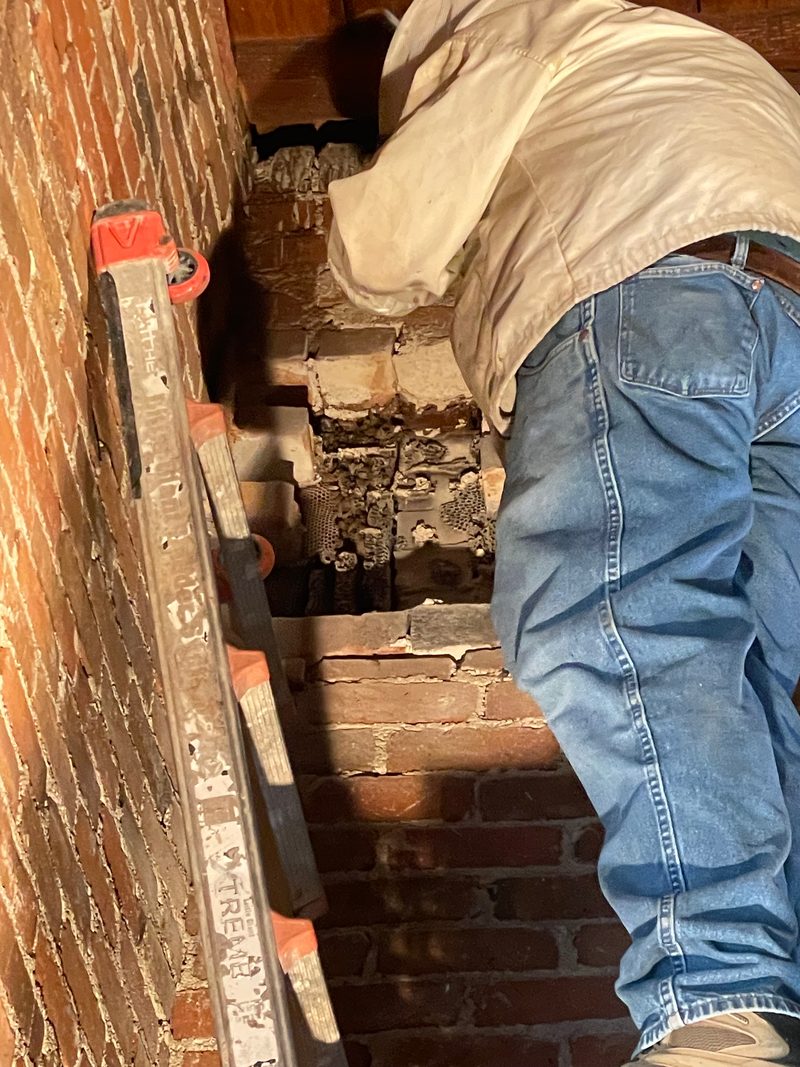
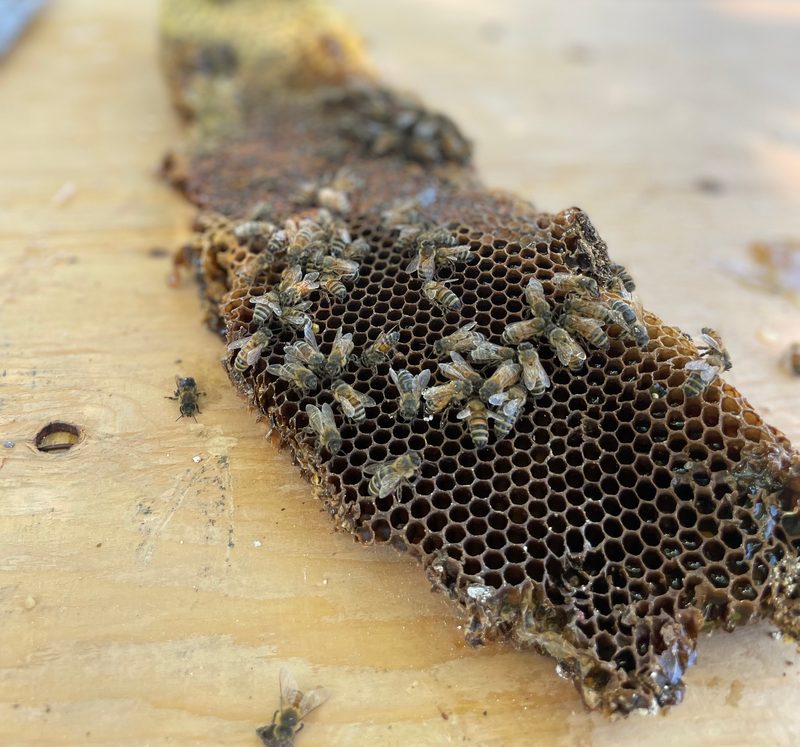
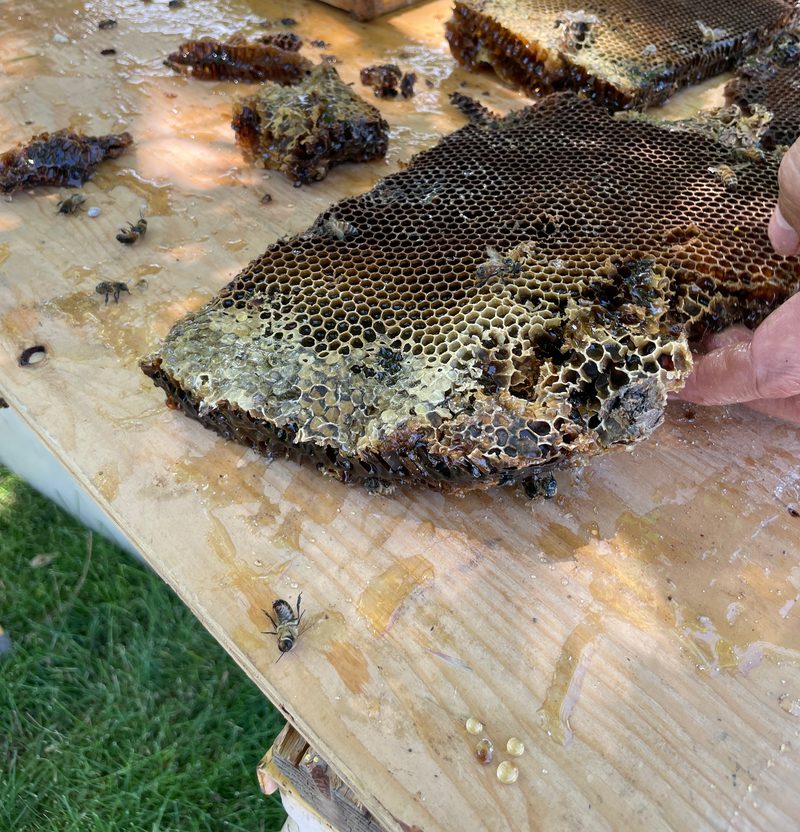
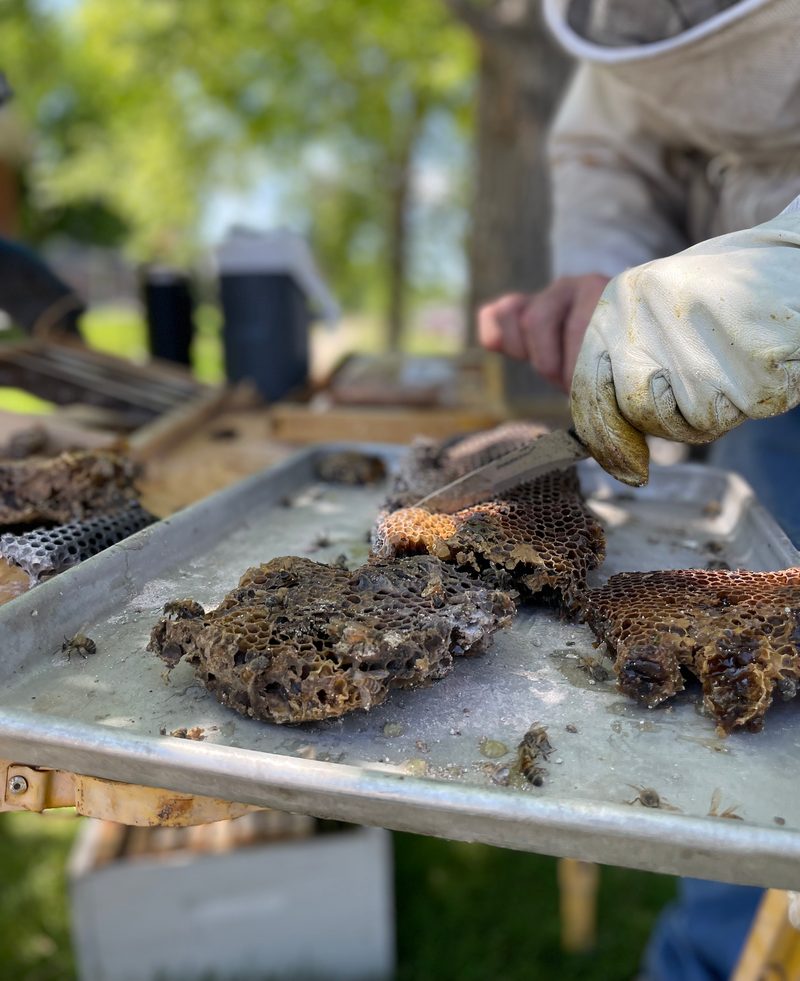
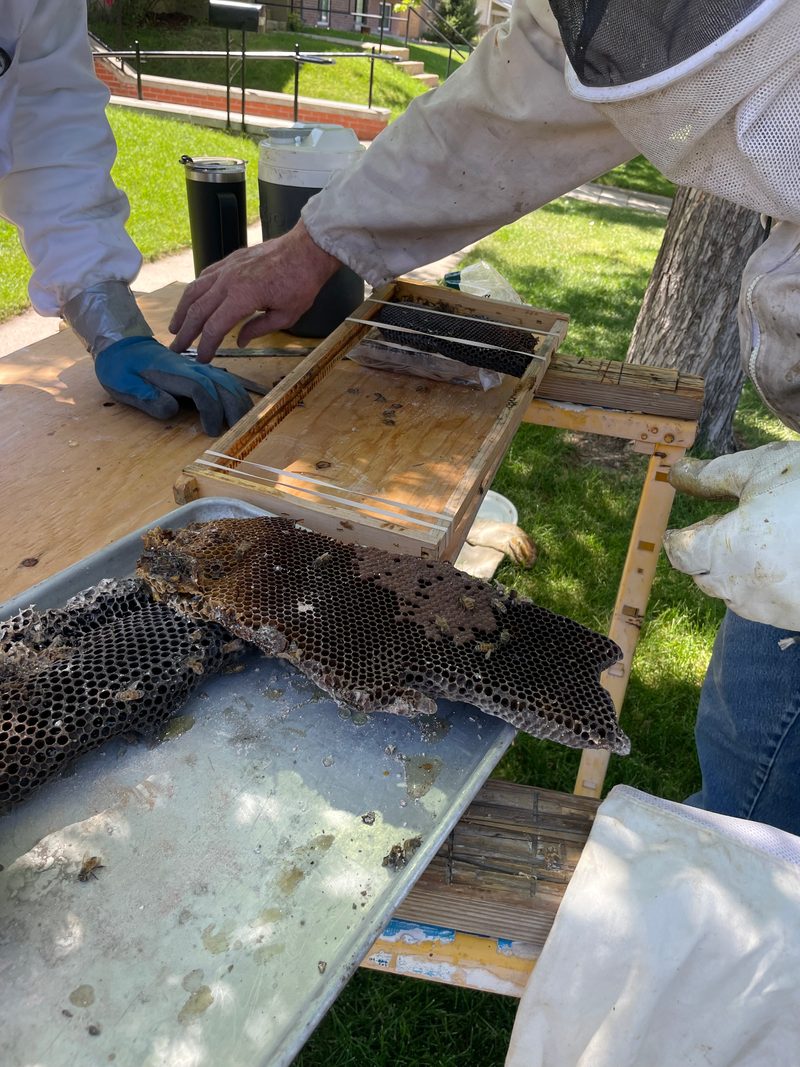
With the wall open, Stuart removed all of the hives and the honey and relocated the bees.
06 · Rebuilding
Putting the Brick Back
Once the bees were gone, we replaced the brick in the tower, and the restoration could move ahead.
07 · In the end
Save the Bees
You always hear that we need to save the bees. In the end, that is what this came down to: saving the bees while fixing the problem they were causing the church and its brick.
The bees were relocated instead of exterminated, the tower wall was put back together, and the restoration could begin.
08 · The lesson
Open Mortar Joints Are an Open Door for Bees and Pests
The bees got in through open, failed mortar joints. It is a home maintenance lesson for any brick building: when the mortar is gone, critters and bugs can get in. Repointing open joints keeps the wall sound and keeps them out. On the Church of the Advent, the restoration repointed every elevation by hand in lime putty mortar.
09 · Questions
Questions About the Bell Tower Bees
How did honeybees get into the bell tower?
Through open, failed mortar joints. Once the mortar is gone, the gaps in a brick wall lead straight into the cavities behind it, and bees, critters and other insects can move in.
Were the bees killed?
No. Saving the bees was the goal. Beekeeper Stuart Davis removed the hives and the honey and relocated the bees.
Was bee removal part of Brick Repair Denver's job?
No. Removing the bees was the church's responsibility, and we had told the church members it had to be dealt with before our work could start. The church tried exterminators and bee-removal people, and those attempts fell through. It was coming down to simply exterminating the bees, so our owner, Jesse Smith, stepped in and set up a meeting to get beekeeper Stuart Davis on site.
Why did the bees have to go before the restoration?
The infestation was high in the bell tower, and it had to be taken care of before the scaffolding crews could put up scaffolding for the masonry restoration.
How do I keep bees and critters out of my brick walls?
Keep the mortar joints closed. Open joints are a way in for bees, critters and bugs, and repointing them is part of regular home maintenance for a brick house.
Related Church of the Advent and Villa Park Pages
Tell us about your brick. We will take it from there.
Start Your Project Request
- Tell us what you're seeing on the brick or stone
- Send photographs of the brick or stone and areas of concern
- We review and qualify the inquiry, then recommend the appropriate next step