
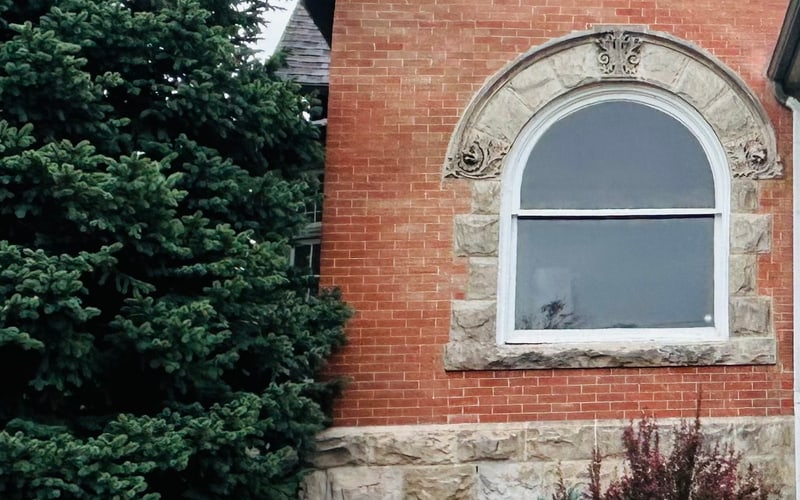
Our Highlands work includes the residential brick and stone restoration of an 1892 home, where we reset a slipped carved rhyolite arch: every original stone was cataloged, repaired where needed and reinstalled in its original position.
Our Masonry Services in the Highlands
- Tuckpointing and repointing: mortar matched to the original in strength and color, including lime mortar for older brick.
- Brick repair and restoration: cracked brick, bulging or separating walls and in-kind brick replacement.
- Stone repair: carved stone, arches, sills and foundations repaired and reset.
- Chimney repair: crowns, open joints and loose brick at the roofline.
- Brick cleaning and paint removal: gentle methods that keep the brick face intact.
- Historic masonry restoration for older homes, done to conservation standards.
Tell us about your brick. We will take it from there.
Start Your Project Request
- Tell us what you're seeing on the brick or stone
- Send photographs of the brick or stone and areas of concern
- We review and qualify the inquiry, then recommend the appropriate next step
Tuckpointing and Repointing in the Highlands
On an older brick home, the mortar joints wear out long before the brick does. Open joints let water into the wall, and over freeze and thaw cycles that water loosens brick and stone. We repoint by hand, matching the original mortar so the repair protects the brick and blends into the wall.
Older brick generally calls for a softer mortar than modern cement mixes. On our Highlands stone arch project we reset the brick in lime mortar with no Portland cement. Whatever the house, we match the mortar to the wall rather than the other way around.
Highlands Homes and Their History
The Highlands sit on the hill northwest of downtown Denver, across the South Platte River, and take in neighborhoods such as West Highland, Highland and Potter-Highlands. The area began as its own town: Highlands was incorporated in 1875 and, after the 1893 silver crash strained its finances, residents voted in 1896 to join Denver. By 1890 it already included more than thirty-five separate subdivisions, so today "the Highlands" covers several neighborhoods, West Highland among them, rather than one.
Many homes here date to the decades around that annexation. In the Potter-Highlands area, for example, the Denver Public Library notes Victorian-era houses built before 1893 alongside later Foursquare, Prairie, Colonial Revival and Craftsman homes. Brick walls, stone foundations and carved stone trim are common, and all of them need masonry that respects how they were built.
Common Masonry Problems on Highlands Homes
- Stair-step cracking in brick: cracks that follow the mortar joints in a step pattern usually point to movement in the wall, not just bad mortar.
- Slipping arches and lintels: stone or brick over a window that has dropped at the top needs the cause found before it is reset.
- Separating brick wythes: on older solid brick walls, the outer layer of brick can pull away from the inner layer.
- Failed earlier repairs: hard cement patches and visible mortar fills on stone often fail and hide damage.
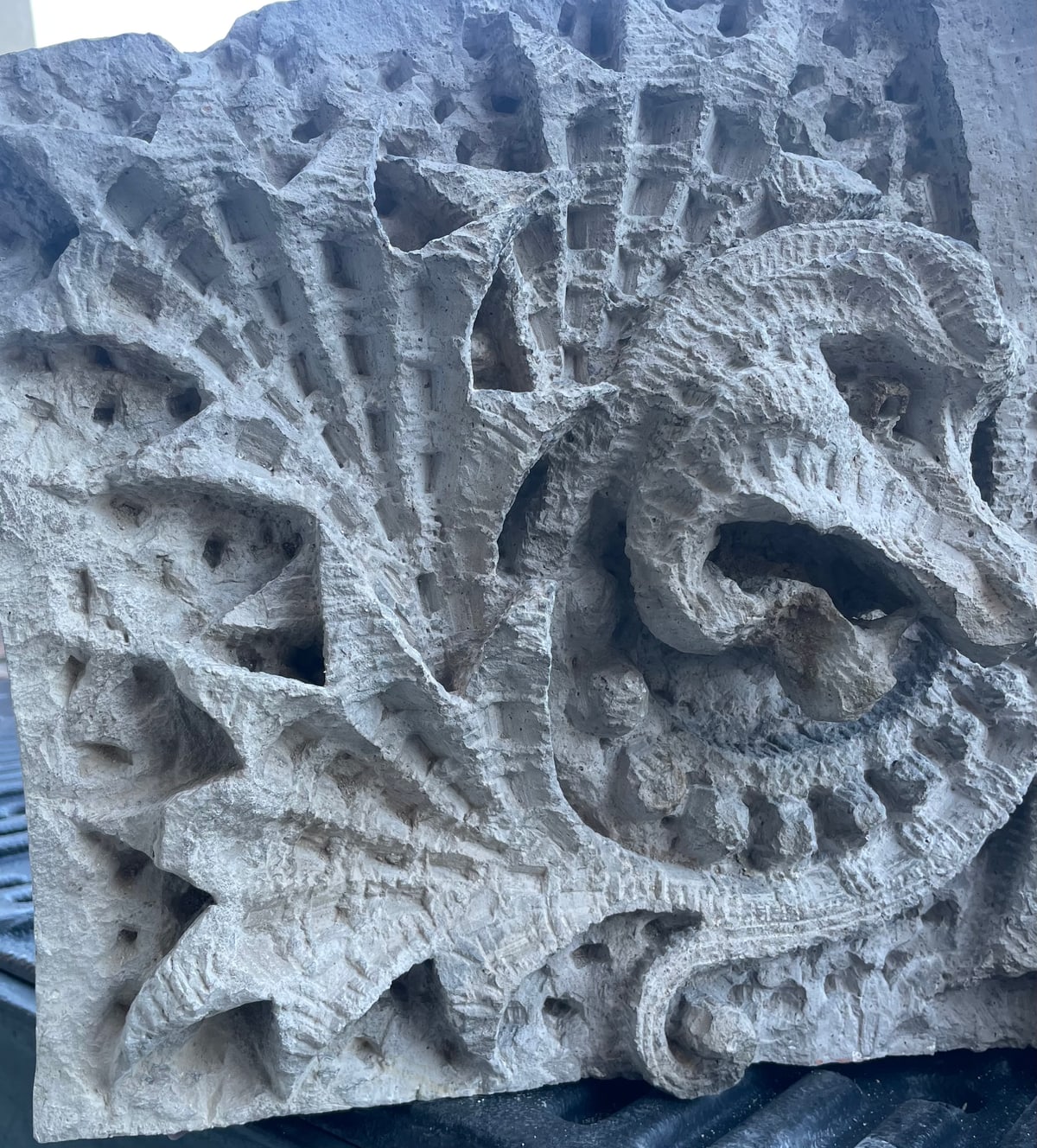
- Weathered carved stone: cracked, eroded or broken ornament that can often be repaired rather than replaced.
- Open and eroded mortar joints that let water into the wall.
Highlands Project: Residential Brick and Stone Restoration
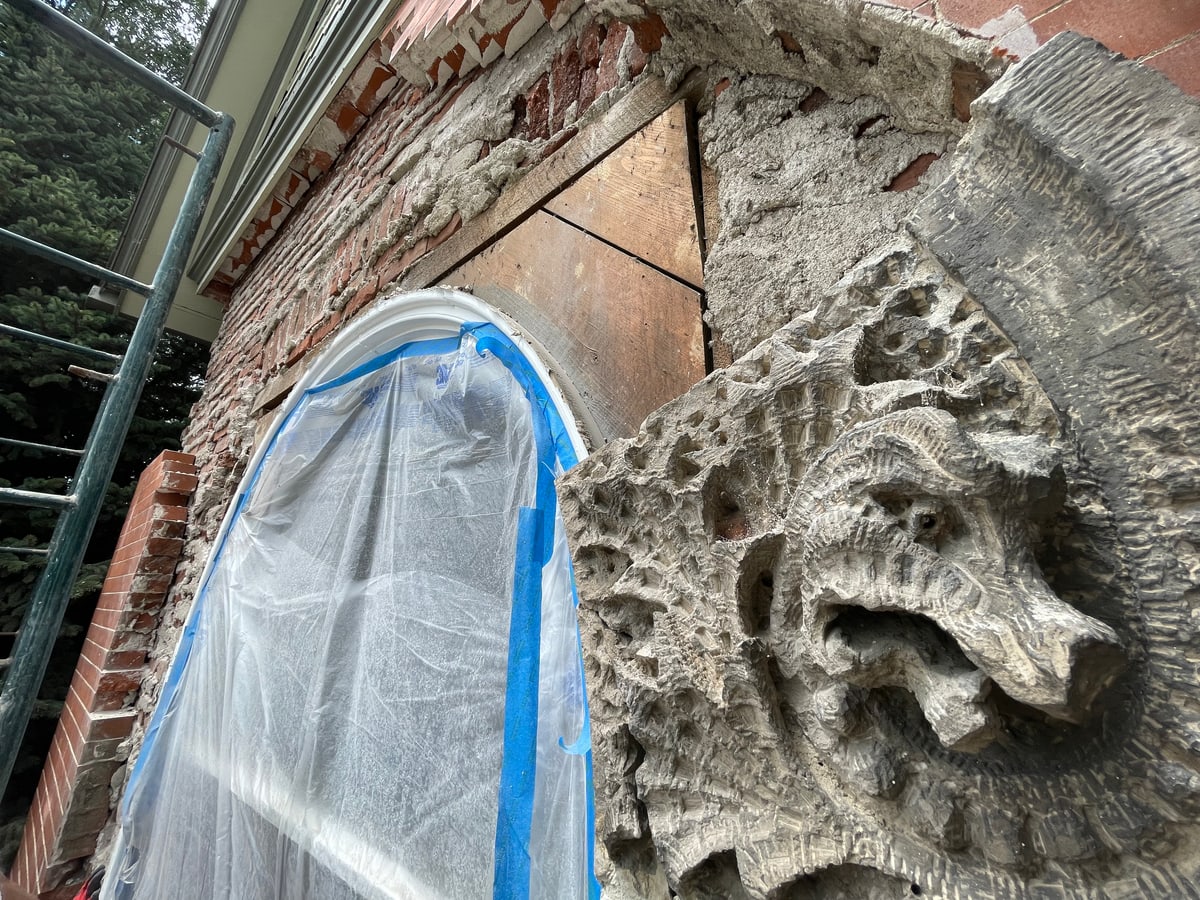
On an 1892 brick home in the Highlands, the carved stone arch over the front window had visibly slipped at the top. Our assessment traced it to stair-step cracking in the brick, failed earlier repairs with mismatched mortar and an outer brick layer pulling away from the inner one. From June to late August 2023 we cataloged and removed the arch, took down and reset much of the outer brick in lime mortar, repaired two damaged stones in our shop and reinstalled every original stone in its original position.
- 1892year the home was built
- 2023assessment in June, completed late August
- Everyoriginal arch stone reinstalled in its original position
- 0%Portland cement in the lime mortar
The front window arch
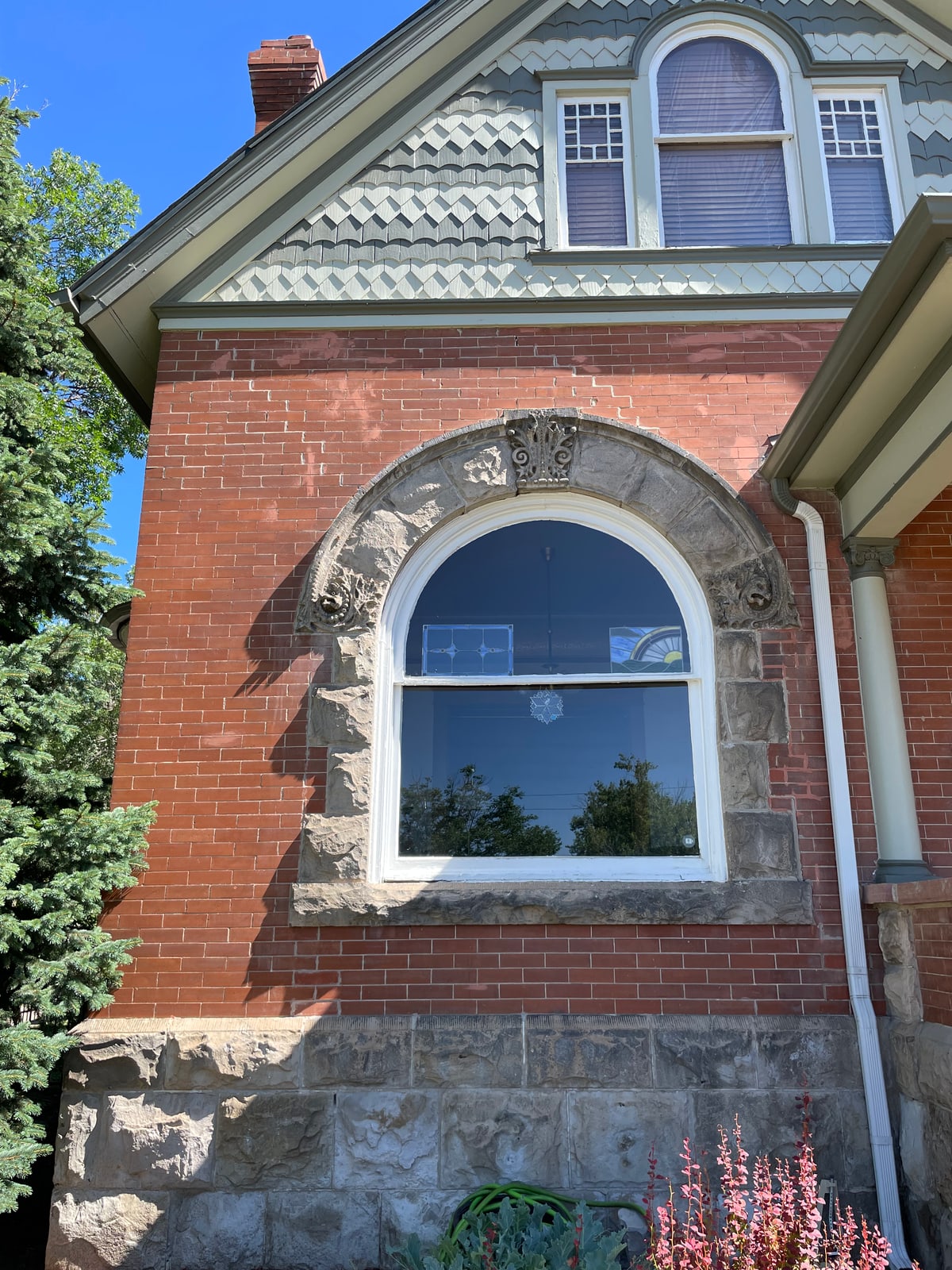
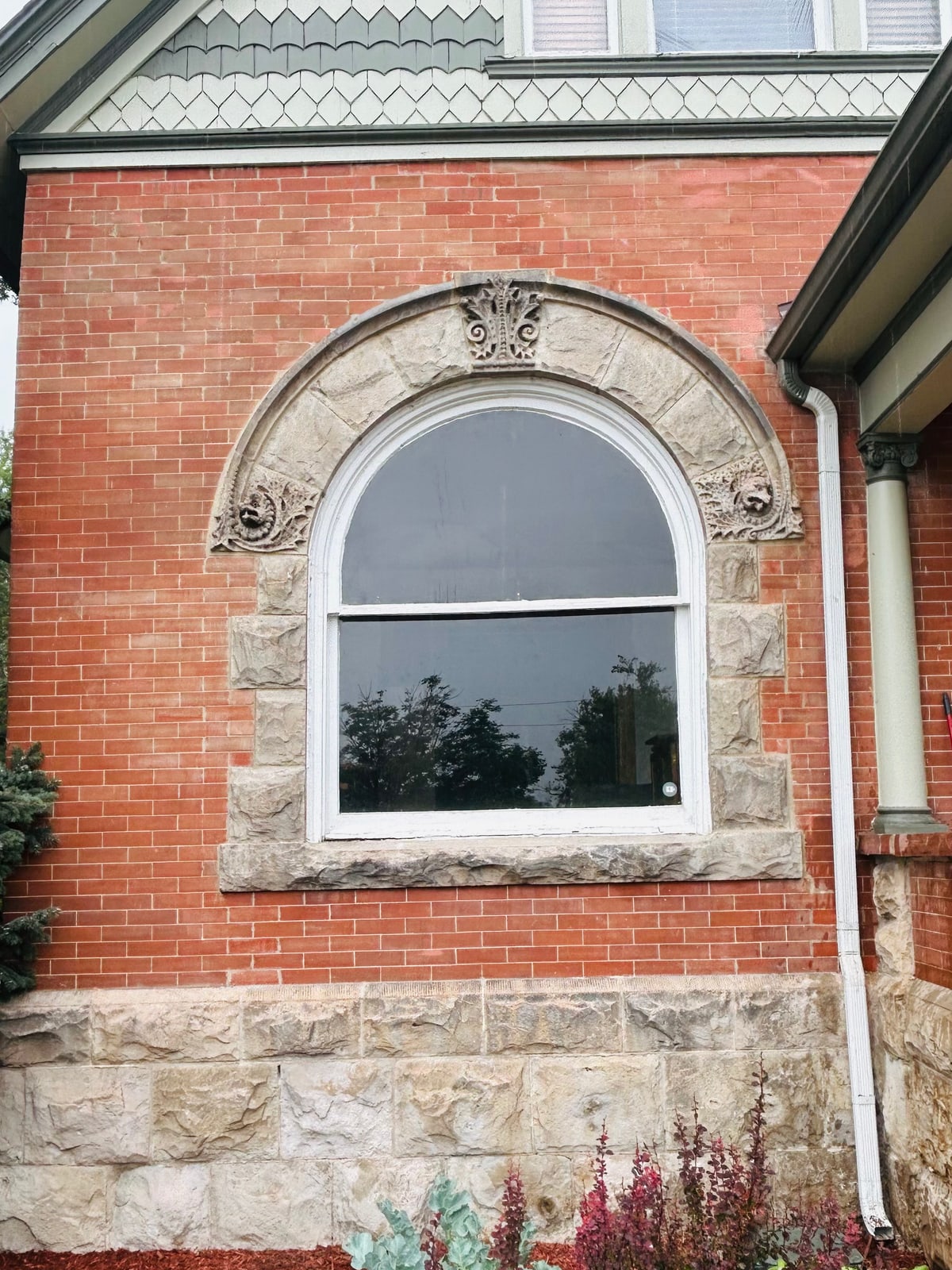
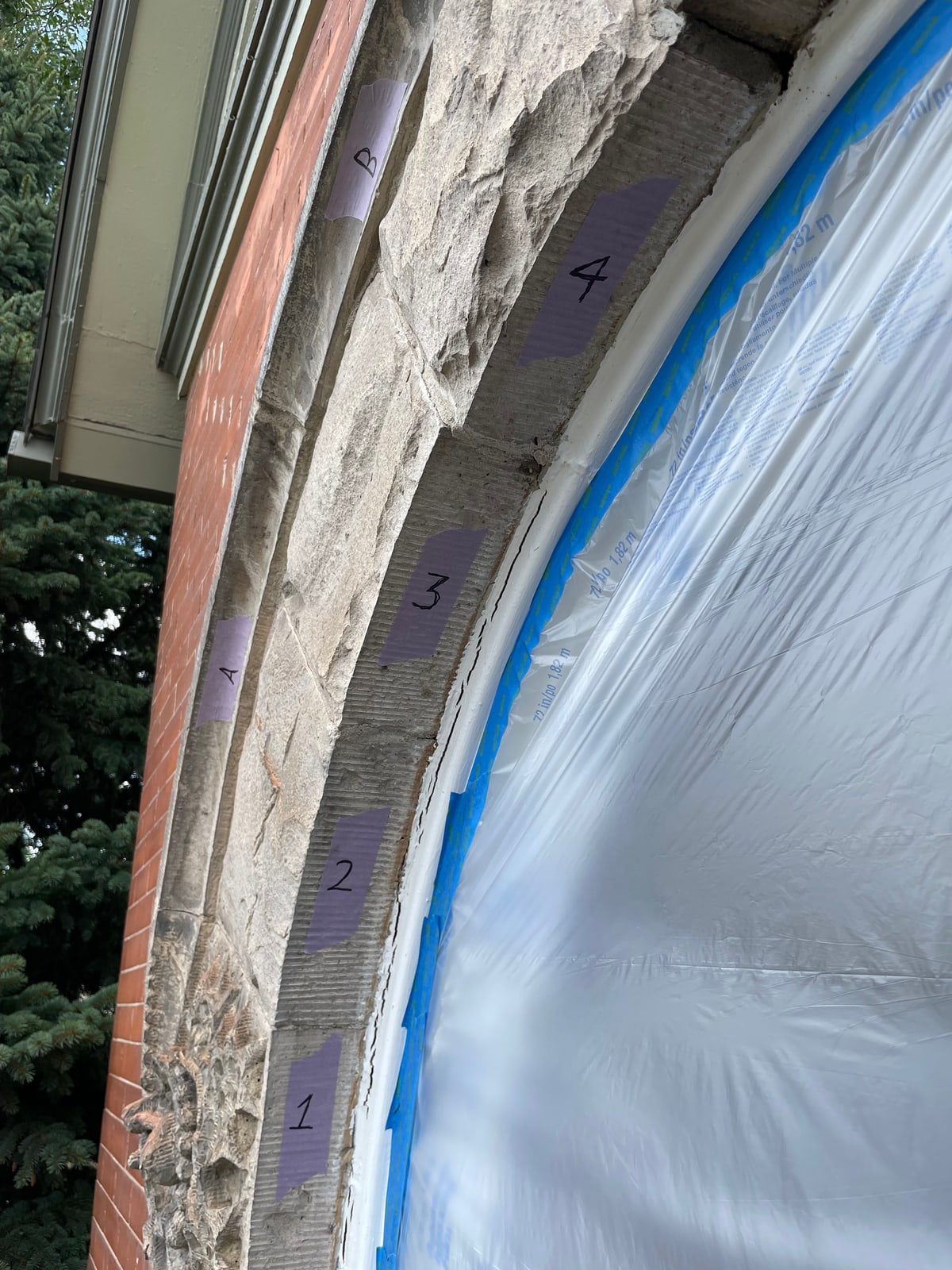
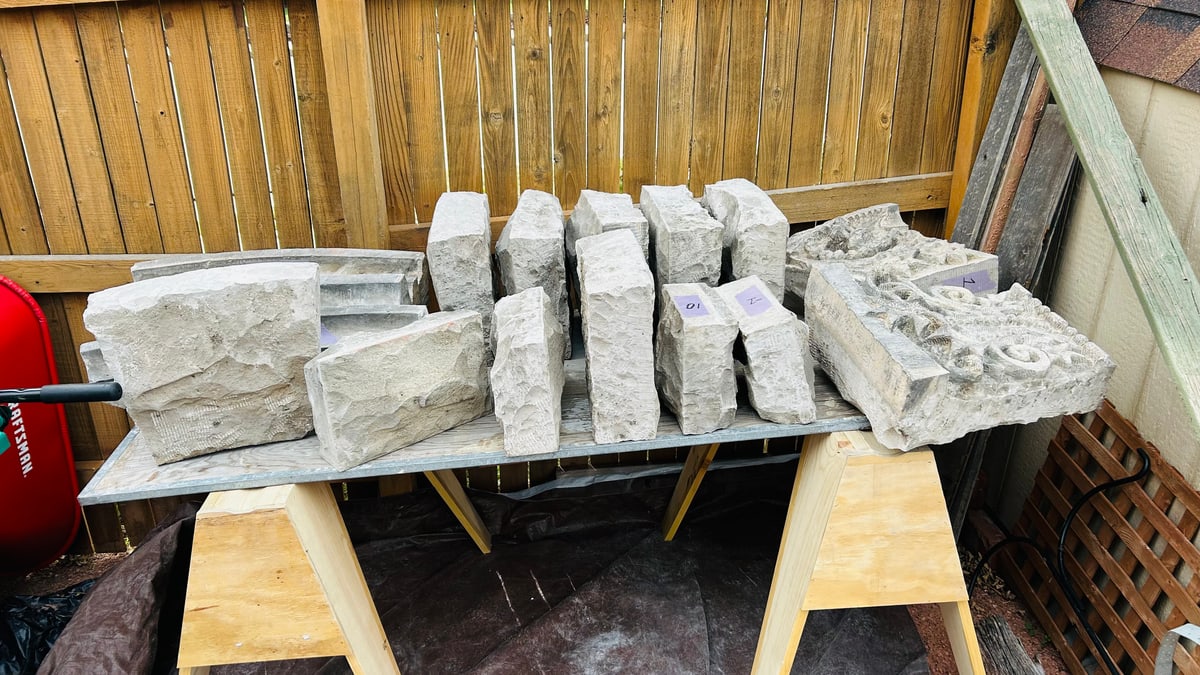
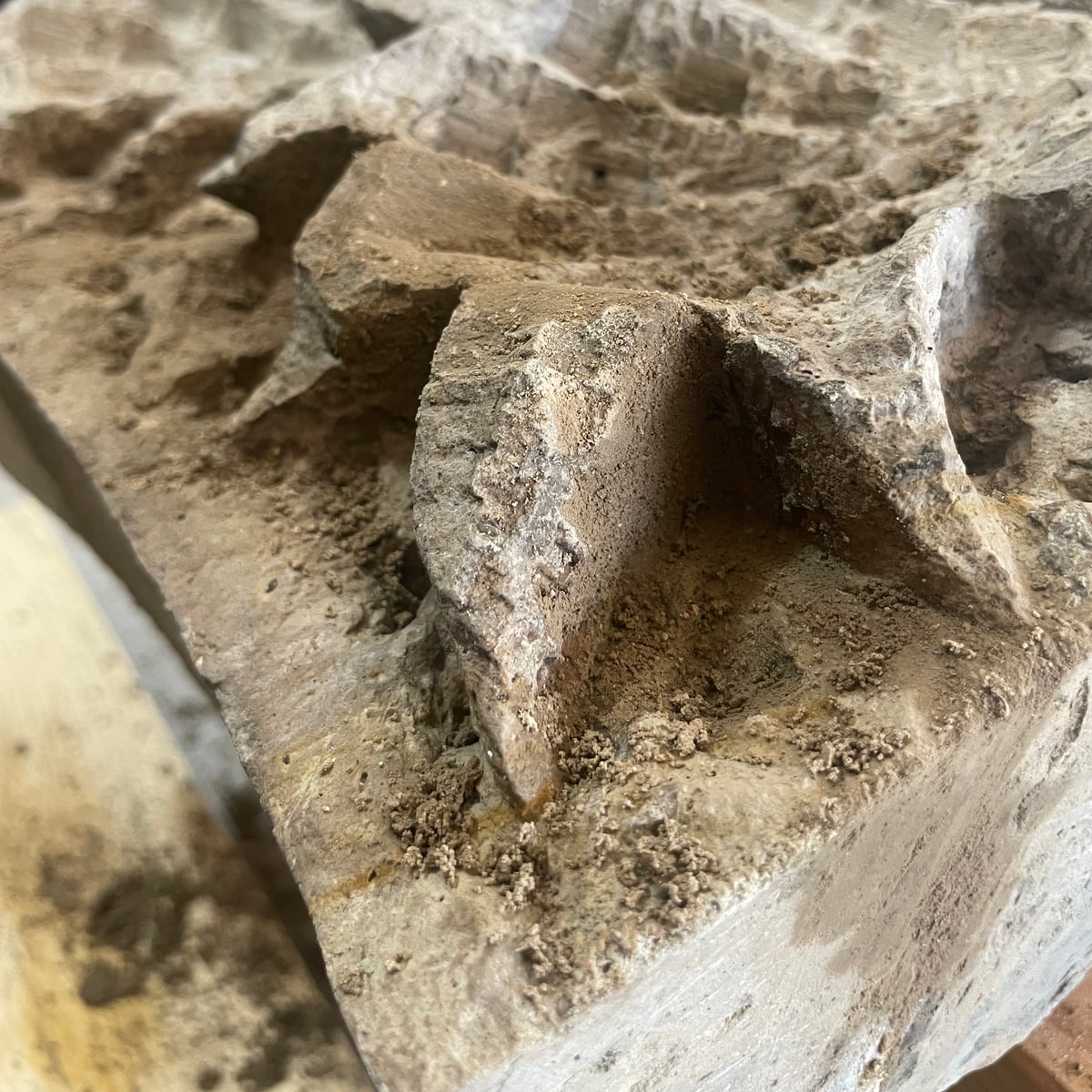
Read the full Highlands project: why the arch slipped, how every stone was cataloged and reinstalled, the step-by-step repair of the dragon-face stone, and before and after photos.
How We Approach Masonry Repair in the Highlands
Every project starts with an assessment: what is failing, why, and what it will take to fix the cause, not just the symptom. On our Highlands arch project, the slipped stone was the symptom. The cause was in the brick wall around it, so the repair had to include the wall.
Our approach is repair over replacement. We keep original brick and stone wherever it can be saved, document each piece before it moves, and use compatible materials such as lime mortar so the repair works with the old masonry instead of against it.
Potter-Highlands Historic District and Older Highlands Homes
The Denver Public Library notes that several of the original Highlands subdivisions are historic districts in their own right, such as the Potter-Highlands Historic District, with nearly 700 buildings across 276 acres. We offer stone and brick repair in the Potter-Highlands Historic District and across the Highlands, including West Highland. Not every Highlands home is in a district; if you are not sure whether yours is designated, the City's Landmark Preservation office can confirm before exterior work begins.
Designated or not, we treat older Highlands masonry the same way: original brick and stone kept wherever possible, lime mortar where the wall calls for it, and repairs done to conservation standards.
Highlands Masonry Questions
Do you repair older brick homes in the Highlands?
Yes. We repair brick and stone on homes across the Highlands, including West Highland: tuckpointing open joints, repairing cracked or separating brick walls, resetting stone, repairing chimneys and cleaning brick. Every job starts with an assessment of the masonry and the cause of the damage.
Can a carved stone that has cracked or broken be saved?
Often, yes. On our Highlands arch project, a carved dragon-face stone that came apart during removal was reassembled from its original pieces in our shop and its fine details finished with matching stone patching mortar, then reinstalled in its original position.
Why does my stone arch or lintel look like it has slipped?
A slipped arch is usually a symptom of movement in the wall around it, such as stair-step cracking in the brick or an outer brick layer pulling away from the inner one. We look for the cause first, because resetting the stone alone will not last if the wall keeps moving.
What mortar do you use on older Highlands brick?
We match the mortar to the wall. On our Highlands stone arch project, we used lime mortar with no Portland cement.
Do you repair brick and stone in the Potter-Highlands Historic District?
Yes. We offer stone and brick repair in the Potter-Highlands Historic District and across the Highlands, including West Highland. Several original Highlands subdivisions are historic districts, such as Potter-Highlands, but not every home is in one. The City's Landmark Preservation office can confirm whether a specific property is designated.
How do I get started?
Call (720) 445-9474 or request a consultation. We will look at the masonry, explain what we see and what is causing it, and recommend repairs.
Brick Repair in the Highlands and Nearby Neighborhoods
We work across the Highlands and in nearby northwest Denver neighborhoods, including LoHi, Sunnyside, Berkeley, Sloan Lake and Jefferson Park, along with Front Range cities.
See our other neighborhood work in Capitol Hill, Park Hill and Villa Park, or browse all service areas.
Tell us about your brick. We will take it from there.
Start Your Project Request
- Tell us what you're seeing on the brick or stone
- Send photographs of the brick or stone and areas of concern
- We review and qualify the inquiry, then recommend the appropriate next step