

That white, chalky bloom on your brick has a name. Efflorescence on brick is salt. Water dissolves salts from the brick, the mortar, the soil or old repairs, carries them to the surface and leaves them behind as it evaporates.
On its own, efflorescence is usually cosmetic. What it tells you is not. Every white bloom is a map of where water is moving through your wall.
What Is Efflorescence on Brick?
Efflorescence needs three things: salts, water to dissolve and carry them, and a surface where that water can evaporate. Take away any one of the three and it stops.
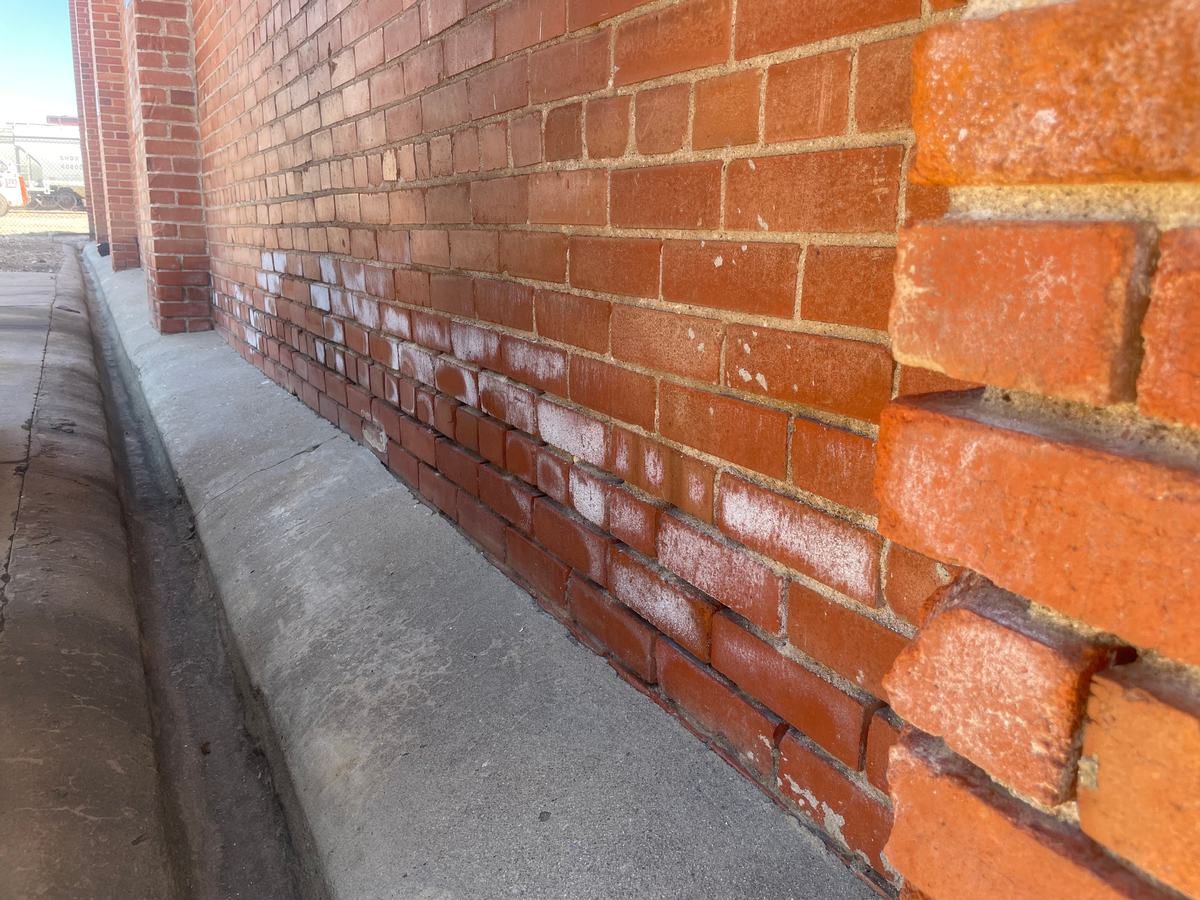
It usually appears as a white or grayish powder or a crust. It shows up first where water collects or wicks into the wall: just above the ground, under windowsills, below leaking gutters and around chimneys and porch piers.
What Causes Efflorescence on Brick?
Water Getting Into the Wall
The salts are almost always there already. Water is what moves them. Common sources on Denver houses:
- Ground moisture wicking up into the lowest courses of brick
- Downspouts, sprinklers and snow piled against the wall
- Leaking gutters, sills and copings
- A cracked chimney crown sending water down through the stack
- Moisture from inside the house reaching a cold wall
Salts in the Materials
Salts come from the brick itself, from mortar, from the soil and from de-icing salts on steps and walks. Cement-based mortars and patches can add salts of their own.
New Brick and Fresh Mortar
New masonry often blooms for a season as it dries out for the first time. This is sometimes called new building bloom. It usually fades on its own as the wall dries.
Is Efflorescence Harmful?
The white powder on the surface does not hurt the brick. The trouble is what it signals, and what happens when the salt cannot reach the surface.
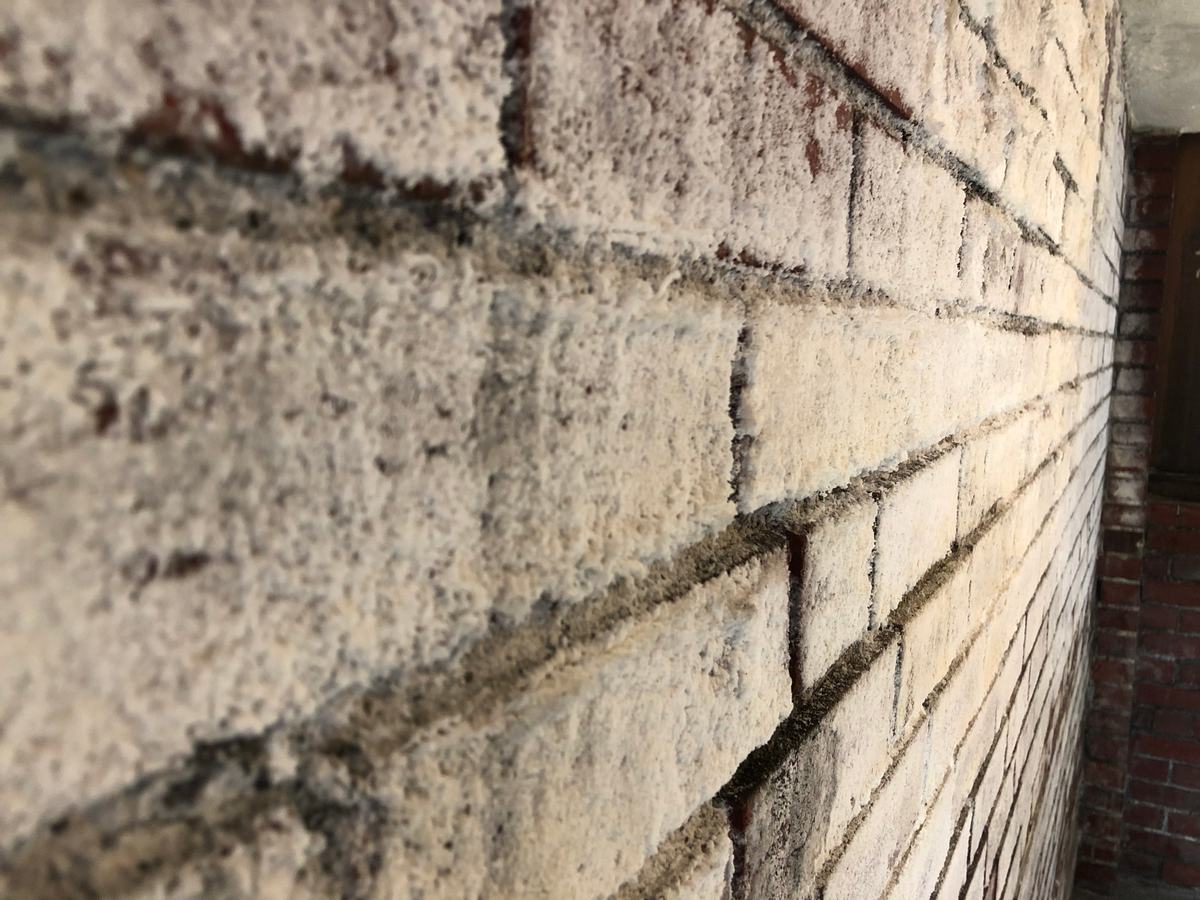
When water evaporates just under the face of the brick instead of on it, the salts crystallize inside the brick's pores. This is called subflorescence. The growing crystals push from the inside, and the face of the brick starts to powder, flake and pop off. That is one of the main causes of brick spalling and of crumbling brick.
How Do You Remove Efflorescence From Brick?
Fix the Water First
Cleaning efflorescence without stopping the water is only temporary. It will come back as long as water keeps carrying salt to the surface.
Dry Brush It
On a dry day, brush the salt off with a stiff natural-bristle brush and sweep it up, so it does not wash back into the wall. This is often all it takes.
Use Water Sparingly
If dry brushing is not enough, a light rinse with plain water and a soft brush can help. Use as little water as you can. Every soaking can dissolve more salt and carry it back into the brick.
What Not to Use
- No pressure washing or sandblasting. Both strip the hard outer face from old brick and leave it open to faster damage.
- No acids on old brick. Strong acid cleaners can etch soft brick and mortar and leave salts of their own behind.
- No wire brushes. They scratch the face and leave metal behind that can rust and stain.
- Do not seal over it. A water-repellent coating can push salts to crystallize under the surface instead of on it, which can turn a cosmetic problem into spalling.
For harder cases, see how we approach brick cleaning.
Why Does Efflorescence Keep Coming Back?
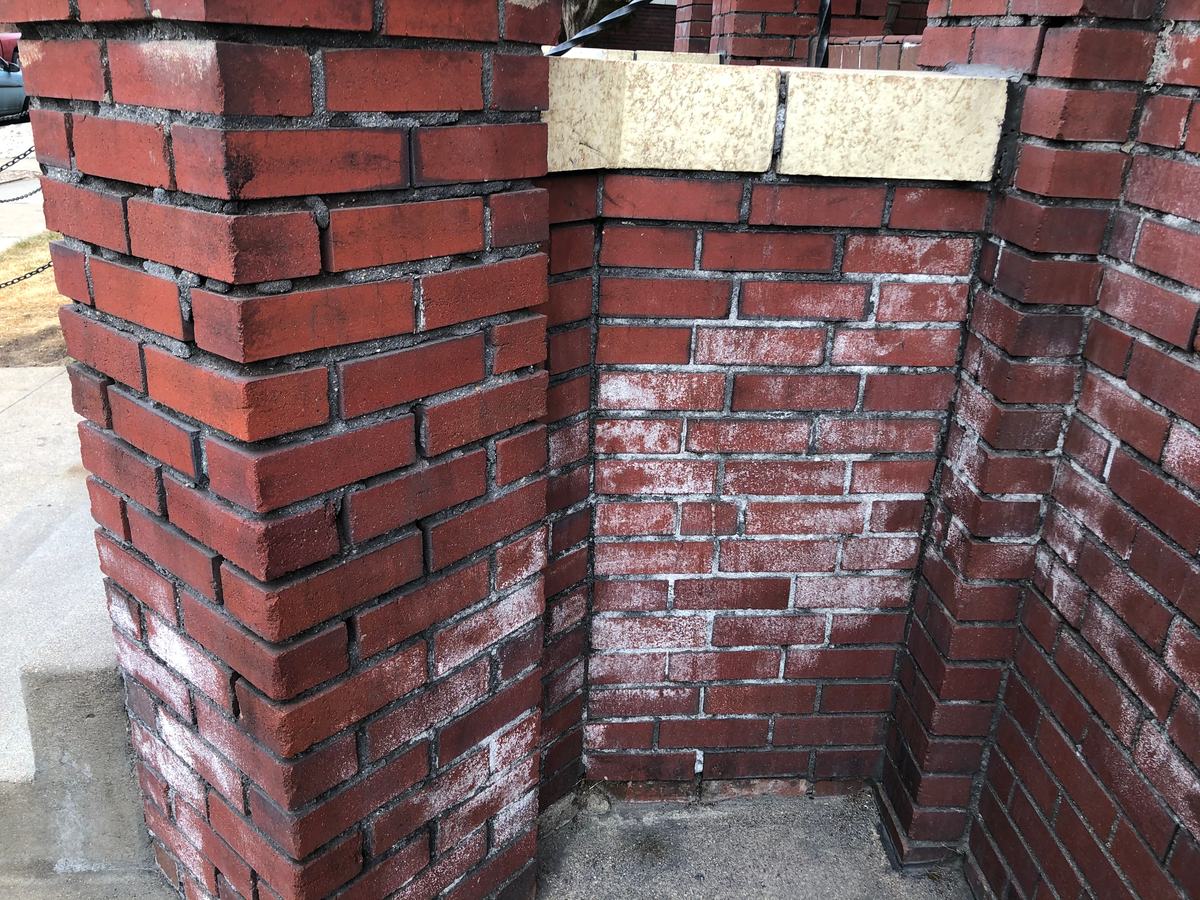
Because the water keeps coming. A bloom that returns after every cleaning, every spring or every storm is telling you where water is getting in. Watch where it appears:
- Along the base of the wall: ground moisture, grading, sprinklers or snow
- Under a sill or coping: a failed joint or flashing above
- On a chimney: a cracked crown or open joints near the top. See Cracked Chimney Crown.
- Inside a room or basement: water moving through the wall from outside or rising from below
How Do We Address Efflorescence?
- Find the water. We trace where the salt appears back to how water is getting in, and fix that first.
- Remove the salt gently. Dry brushing first, then the gentlest cleaning that works, tested on a small area.
- Repair what the salt damaged. Soft, sandy joints are repointed with a breathable lime mortar that lets the wall dry. Badly spalled bricks are replaced in kind.
- Help the wall stay dry. Gutters, downspouts, grading and sprinklers, so the wall can dry out and stay that way.
From Our Work in Denver
The same principles, applied on real Denver buildings.
Church of the Advent, Villa Park
A 1913 Denver Landmark restored with a State Historical Fund grant: lime repointing, mortar matching and cast stone repair.
Cass Mansion, Capitol Hill
A Denver Landmark in Capitol Hill. We conserved 42 Manitou sandstone copings and repointed the brick in lime putty mortar.
Send Us Photos and Talk It Through
Send us photos. We will personally go through them with you and talk through what we are seeing, on a phone call or a Zoom call, whichever works for you. A photo of the whole wall, a close-up of the white deposits and a photo of the gutters, downspouts or grade nearby help most.
Prefer to write it all out? Use our consultation request form.
Questions Homeowners Ask
What is efflorescence on brick?
It is salt. Water dissolves salts from the brick, mortar, soil or old repairs, carries them to the surface and leaves them behind as a white powder or crust when it evaporates.
Does efflorescence damage brick?
The salt on the surface does not. When the salt crystallizes just under the surface instead, it can push the face of the brick off, causing powdering and spalling. Efflorescence is also a sign that water is moving through the wall, and that water can do damage of its own.
How do you remove efflorescence from brick?
Fix the water source first. Then dry brush the salt off with a stiff natural-bristle brush on a dry day and sweep it up. If needed, rinse lightly with plain water. Avoid pressure washing, acids, wire brushes and sealers on old brick.
Will efflorescence go away on its own?
On new brick, it often fades as the wall dries out for the first time. On older brick, it usually keeps coming back until the water source is fixed.
Should I seal brick to stop efflorescence?
We do not recommend it on older brick. A sealer can push the salts to crystallize under the surface instead of on it, where they can damage the face of the brick. Stopping the water is the lasting fix.
Is efflorescence a sign of a leak?
It is a sign that water is moving through the masonry. That water may come from a leak, from the ground, from sprinklers, from snow against the wall or from a cracked chimney crown. Where the salt appears usually points to the source.