

Crumbling brick rarely shows up all at once. You run your hand along the wall and it comes away gritty. A little pile of red dust sits on the sill. The mortar between the bricks feels like damp beach sand, or it is simply gone.
It is unsettling. It is also common on older Denver homes. In most cases it can be repaired without tearing the wall down.
Crumbling masonry is not random. Brick and mortar break down for a short list of reasons, and nearly every one of them comes back to water. Find the water and you have found most of the answer.
This guide explains what you are seeing, what usually causes it and what a careful repair looks like.
First, Look Closely: Is It the Brick or the Mortar?
They are two different problems, and they mean different things.
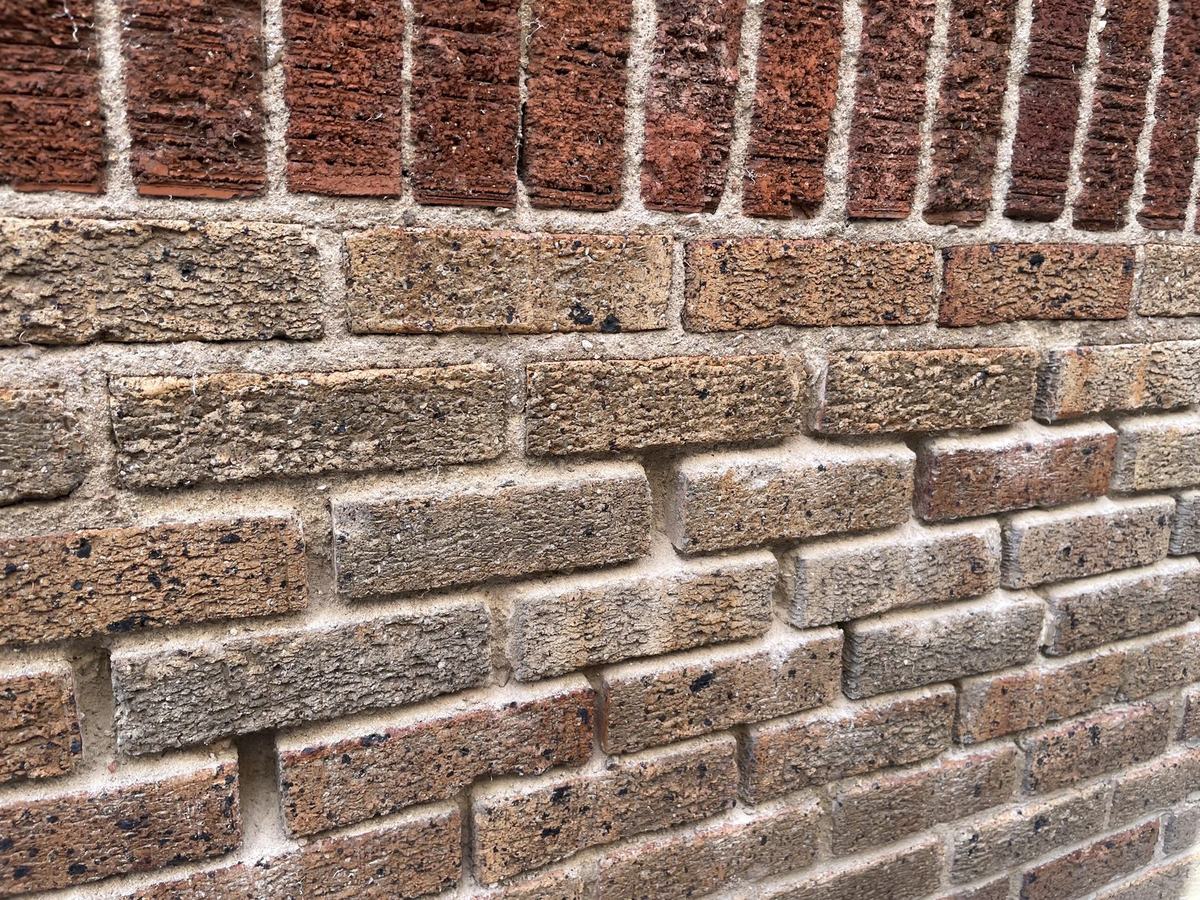
Sandy or Recessed Mortar
If the joints are soft, sandy or sit back from the face of the brick, the mortar is wearing out. On an old house, that is not always a failure. Traditional lime mortar was made to be the softer partner in the wall. It takes the weather so the brick does not have to. After many decades it erodes and needs to be renewed. That renewal is called repointing.
Powdery or Flaking Brick
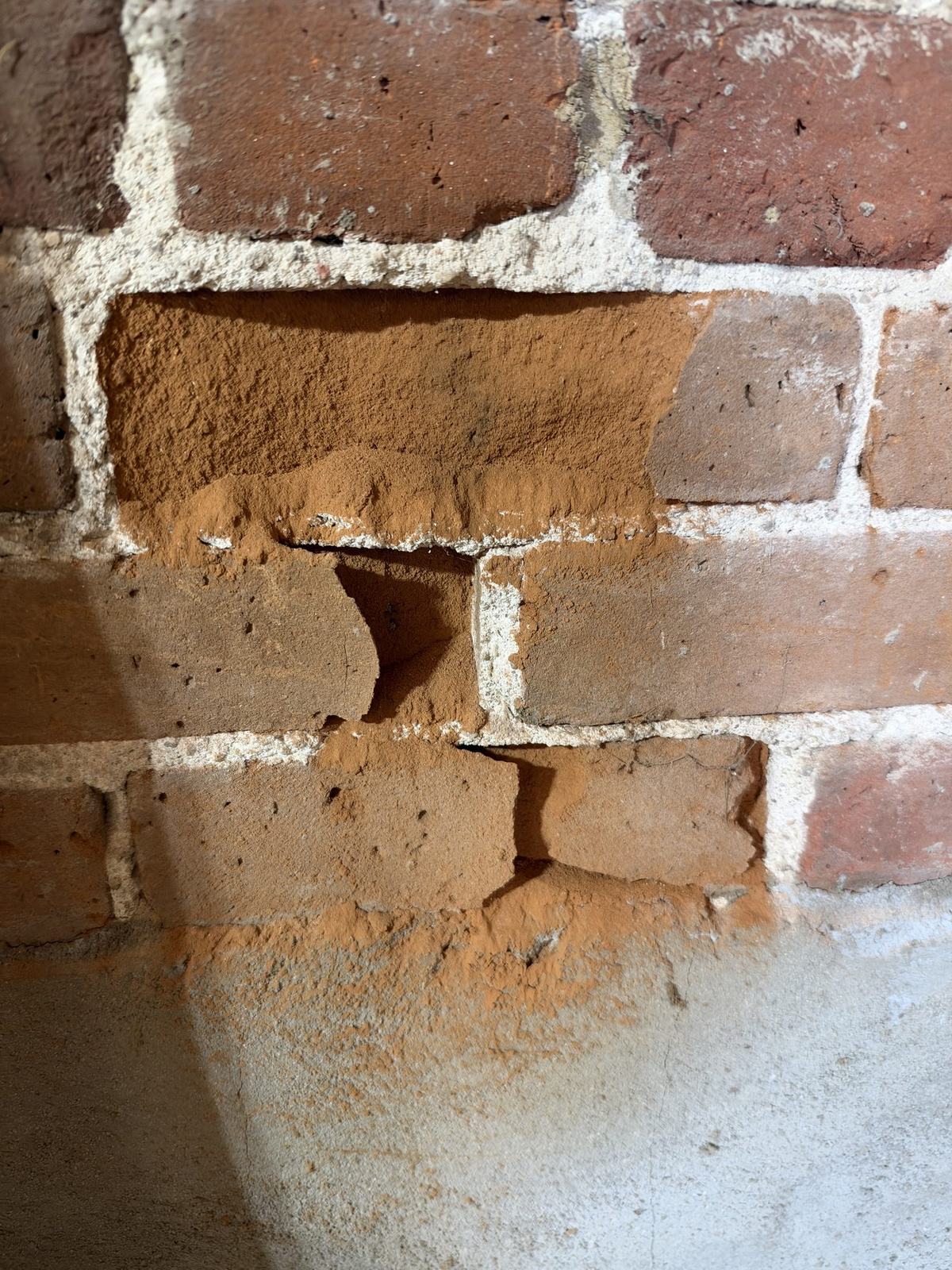
If the brick itself is turning to powder, flaking in layers or losing its face, that is more serious. Brick is meant to outlast its mortar. When the brick breaks down first, something is pushing it past what it can bear: trapped water, salts, freezing, or a mortar that is harder than the brick. When whole faces pop off, it is called spalling. We cover it in its own guide, Brick Spalling.
White Powder on the Surface
A white, chalky or fuzzy deposit is usually salt. Water carries dissolved salts through the wall and leaves them behind when it dries. On the surface this is called efflorescence. It is a message more than a problem: water is moving through that spot. When salts crystallize inside the brick instead of on it, they can push the surface off. See Efflorescence on Brick.
Why Is My Brick Crumbling?
Water Is Almost Always Where It Starts
Leaking gutters. Downspouts that empty against the wall. Sprinklers that hit the brick every morning. Soil or mulch piled above the foundation. Snow that sits against the base of a wall for weeks. Each one keeps brick wet, and wet brick is where nearly every other problem begins.
Denver's Freeze and Thaw
Denver can swing from a mild afternoon to a hard freeze overnight, and it does so again and again through the winter. Water expands when it freezes. Inside a saturated brick, that expansion pries the material apart a little at a time. A dry brick shrugs it off. A wet one slowly loses the fight.
Hard Cement Repairs on Soft Brick
This one is common, and it is the most avoidable. Many older Denver buildings were laid with soft brick in soft lime mortar. Years later, someone repairs the joints with a hard, cement-rich mortar. It looks tidy at first. But a hard joint does not give when the wall moves, and it does not let moisture out easily. So the stress and the water go into the brick instead. Edges crack. Faces break away. The repair outlasts the brick it was meant to protect.
We explain this in depth in Lime Mortar vs. Cement Mortar.
Salts
Salts come from the soil, from de-icing products on steps and walks, and sometimes from old cement repairs. As water moves through the wall and dries, the salts crystallize. Inside a brick, those crystals act like tiny wedges.
Coatings and Sandblasting
Sealers and paints that slow moisture leaving the wall can trap it behind the surface. Sandblasting strips the hard, fired outer skin from a brick and leaves its softer core exposed to the weather. Both can speed up crumbling. If your brick was ever blasted, sealed or painted, tell us. It changes the plan.
The Brick Itself
Old brick was not fired as evenly as modern brick. Hardness can vary within a single wall. The softer units are usually the first to show wear, especially where they stay wet.
Where Does Crumbling Brick Show Up First?
Chimneys
The top of a chimney stands in full sun, wind and snow with nothing above it. A cracked crown lets water straight into the courses below. That is why many chimneys crumble at the top first. See our chimney repair page and the crown work on our Park Hill page.
Foundations and Basement Walls
Old brick foundations sit against damp soil. Moisture wicks through and evaporates on the inside face, leaving powdery mortar and white salt behind. See brick and stone foundation repair.
The Base of Walls, Steps and Porches
Splashback, snow, sprinklers and de-icing salt all gather at the bottom of a wall. Porch walls and brick steps take water from every side.
Parapets
A parapet is exposed on both faces and on top. It gets wet from three directions and dries slowly. See brick restoration.
How Do You Repair Crumbling Brick?
Stop the Water First
Repointing a wall that is still being soaked is money spent twice. Before we talk about mortar, we look at gutters, downspouts, grading, sprinklers, flashing and crowns.
Keep Every Original Brick That Can Still Do Its Job
Original brick cannot be bought again. Its size, color and texture took a century to become what you see. If a brick is sound, it stays. If it is worn but still performing, we work with it. We replace only the units that have truly failed, with salvaged or carefully matched brick.
Remove Old Mortar Gently
Old joints should come out without chipping or widening the brick edges. On soft historic brick that often means raking by hand. It is slower. The brick is worth it.
Use a Mortar That Protects the Brick
New mortar should be softer and more breathable than the brick, and close to the original in color, sand and texture. When the building is important or the original mix is unclear, we analyze a sample of the original mortar. The idea is simple. When something in the wall has to give, the mortar should give, not the brick. Mortar can be renewed. Brick, once lost, is gone. Learn more on our historic masonry restoration page.
Give the New Mortar a Proper Cure
Lime mortar needs a patient cure. In Denver's dry air and strong sun that means shade, misting and cover. In cold weather it means keeping frost away. That care takes time, and it is one reason careful bids differ from fast ones. We explain why in Tuckpointing Cost: What Drives the Price.
What Can You Do This Week?
- Turn downspouts so they empty away from the wall.
- Adjust sprinkler heads so they do not hit the brick.
- Keep soil and mulch below the top of the foundation.
- Clear snow away from the base of brick walls.
- Avoid rock-salt de-icers on brick steps where you can.
- Do not pressure wash, sandblast or seal crumbling brick.
- Take photos now, so you can tell later whether it is getting worse.
From Our Work in Denver
The same principles, applied on real Denver buildings.
Cass Mansion, Capitol Hill
A Denver Landmark in Capitol Hill. We conserved 42 Manitou sandstone copings and repointed the brick in lime putty mortar.
Highlands Brick and Stone Restoration
An 1892 home in the Highlands (Highland and West Highland area of northwest Denver). We reset a slipped rhyolite arch, repaired carved stones and relaid the brick in lime mortar.
Send Us Photos and Talk It Through
Send us photos. We will personally go through them with you and talk through what we are seeing, on a phone call or a Zoom call, whichever works for you. Include one photo of the whole wall and a few close-ups. We will tell you honestly what we think is happening and what the next step should be. Sometimes that is a simple fix. Sometimes it is a site assessment. Sometimes it is "keep an eye on it."
Prefer to write it all out? Use our consultation request form.
Questions Homeowners Ask
Is sandy mortar normal on a 100-year-old house?
Often, yes. Lime mortar is meant to wear slowly so the brick does not. After many decades, the outer part of the joint can turn sandy and recede. That is the mortar doing its job, and it means the wall is due for repointing, not that the house is failing. If the sanding is deep, sudden or limited to one wet area, look for a water source first.
Why is my brick crumbling only near the ground?
The bottom few feet of a wall take the most water: rain splashing up, snow piled against it, sprinklers, wet soil and de-icing salt. Moisture also wicks up from the ground. Fixing drainage and keeping the base of the wall dry usually matters as much as the masonry repair itself.
Why is my chimney crumbling above the roof but fine in the attic?
Above the roof, the chimney is exposed on every side and on top. If the crown is cracked or missing, water runs into the top courses. Inside the attic, the same brick stays dry and sheltered. That is why chimney repair so often starts at the crown.
Can I brush off the loose powder myself?
Yes, gently. Use a soft natural-bristle brush and no water. Do not use a wire brush, a pressure washer or sandblasting. Those remove sound material along with the loose. If the powder keeps coming back, it is telling you water is still moving through that spot.
How quickly does crumbling brick get worse?
It depends on how wet that spot stays. A wall that stays dry can sit for years with little change. A wall that soaks up water and then freezes, night after night, can decline noticeably in a single winter. Photograph the same spots each season so you can see the trend.