

Mortar is the smallest part of a brick wall, yet it decides how long the brick lasts. That is why the question of lime mortar vs. cement mortar matters so much on an older home.
Many of Denver's older homes, churches and storefronts were laid in lime mortar. Most mortar sold today is based on Portland cement. In a bucket they look much alike. In a wall they behave very differently. Putting the wrong one against old brick is one of the most common and most costly mistakes made on historic masonry.
Lime Mortar vs. Cement Mortar: The Short Answer
Old, soft brick needs a mortar that is softer and more breathable than the brick itself. For most Denver brick laid before the early 1900s, that means a lime mortar. A hard, dense cement mortar can trap moisture and push stress into the brick, and the brick cracks and spalls as a result.
What Is the Difference Between Lime and Cement Mortar?
Lime Mortar
Lime is made by burning limestone and then slaking it with water. Mixed with sand, it makes a mortar that hardens slowly by drawing carbon dioxide back out of the air. Over time it turns back toward the stone it came from. It stays comparatively soft, it lets water vapor pass, and it gives a little as the wall moves. For thousands of years, lime and sand were simply what mortar was.
Portland Cement Mortar
Portland cement was patented in Britain in 1824 and first made in the United States in 1872. It sets fast and hard, even under water. According to the National Park Service, it did not come into common use across the country until the early 20th century, and by the 1930s most masons were using mixes of equal parts Portland cement and lime. Today's bagged Type N, Type S and Type M mortars are all Portland cement mortars. They are designed for modern brick and block, which are much harder than the brick in a Victorian wall.
What That Means for Denver Buildings
After the fire of 1863, Denver rebuilt its core in brick and kept building in it. So the city holds a long span of brick buildings. A wall from the 1880s is likely to be lime. A wall from 1873 to 1930 could be anything from straight lime to a lime and cement blend. A wall from later decades may have been built with a harder mortar on purpose, with brick to match.
That is why we do not guess. We look, we test, and when it matters we analyze the original mortar.
Why Does Hard Cement Mortar Damage Soft Brick?
Something in the Wall Has to Give
Walls move. They swell in the afternoon sun and shrink on freezing nights. They settle. In a traditional wall, the soft mortar absorbs that movement. If the mortar is harder than the brick, the brick takes the stress instead. Its edges crack and its face breaks away, and that kind of damage cannot be undone.
Water Has to Leave Somewhere
Lime mortar lets moisture move out through the joints. Dense cement mortar resists it. So the water and the salts it carries are forced out through the face of the brick. As they dry, the salts crystallize under the surface and push it off.
The Repair That Outlives the Brick
A cement joint can look sharp for years while the brick around it decays. When a hard cement repair finally comes off soft historic brick, the brick edges underneath are often rounded, cracked or gone. The joint survived. The brick paid for it.
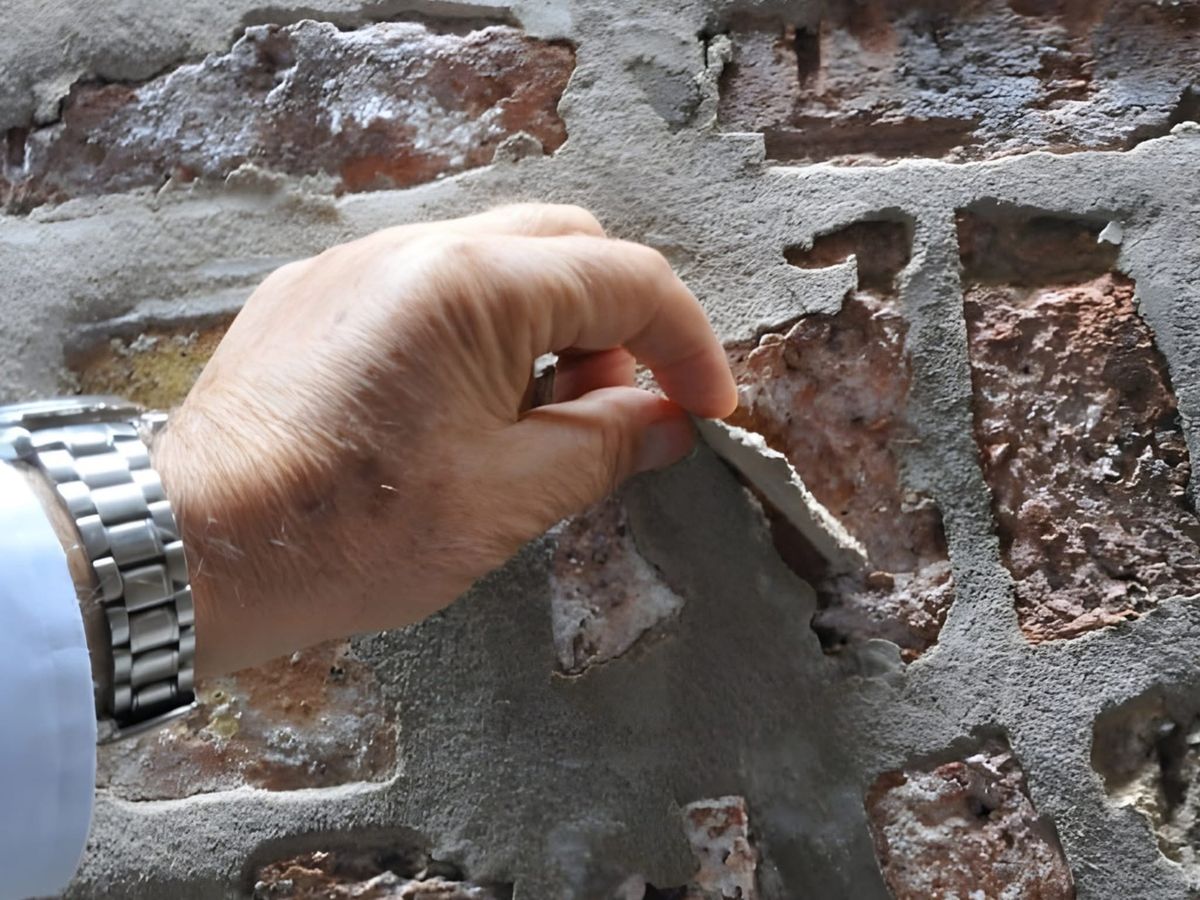
Mortar Should Be Sacrificial to the Brick
This is the principle behind everything we do with mortar.
National Park Service guidance on repointing historic masonry says new mortar should be softer and more vapor permeable than the brick, and as soft or softer than the historic mortar. It describes the right mortar as one that can work with the old in a "sympathetic, supportive and, if necessary, sacrificial" way.
Put plainly: mortar is meant to be renewed every few generations. Brick is meant to stay. When we repoint a wall, we are choosing which material wears out first. We choose the one that can be replaced.
How Do You Choose the Right Mortar for Old Brick?
Read the Wall
We start with the building: its age, how hard the brick is, the original joint color and profile, and any past repairs. A wall usually tells you what it was built with and what has gone wrong since.
Analyze the Original Mortar When It Matters
On important buildings, or when the original mix is not clear, we send a sample of the original mortar for laboratory analysis. At the Church of the Advent, a 1913 Denver Landmark, original mortar was collected and analyzed, and the new lime putty mortar was proven through six blended mockup colors. At the Cass Mansion, an 1899 landmark in Capitol Hill, the brick was repointed in a lab-matched lime putty mortar with no Portland cement.
Match the Sand, the Color and the Joint
Sand is the largest part of mortar, and it carries most of the color and texture. Match the sand and the rest usually follows. We also match the joint profile, because the shape and width of a joint change how a wall looks and how it sheds water.
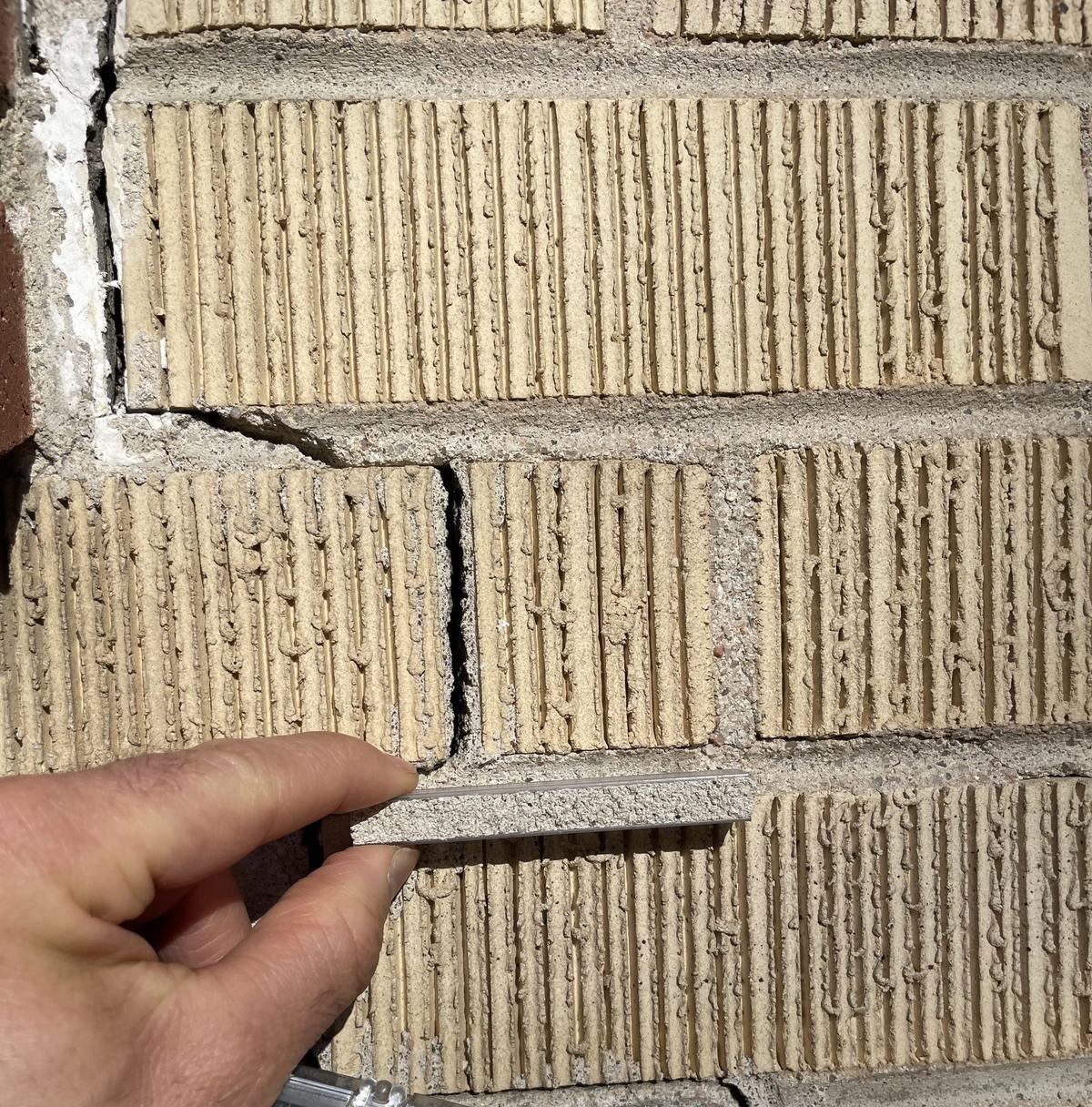
Build Test Panels and Wait
Fresh mortar looks darker when wet and lighter as it dries. So we build sample panels on the wall and judge them after they cure, not the same afternoon.
Lime Asks More of the Mason
Lime does not forgive shortcuts. It sets slowly. It dislikes hot sun, drying wind, rain and frost while it is young. It has to be shaded, misted, covered and protected, sometimes for weeks. Done right, it keeps gaining strength for years. That care is part of what you are paying for, and we explain it in Tuckpointing Cost: What Drives the Price.
Five Questions to Ask Before Anyone Repoints Your Brick
- What mortar will you use, and why that one?
- Is it softer than my brick and no harder than my original mortar?
- How will you remove the old mortar without damaging the brick edges?
- How will you match the color, the sand and the joint profile?
- How will you protect the new mortar while it cures?
Clear answers to those five tell you more than any price.
From Our Work in Denver
The same principles, applied on real Denver buildings.
Church of the Advent, Villa Park
A 1913 Denver Landmark restored with a State Historical Fund grant: lime repointing, mortar matching and cast stone repair.
Cass Mansion, Capitol Hill
A Denver Landmark in Capitol Hill. We conserved 42 Manitou sandstone copings and repointed the brick in lime putty mortar.
Send Us Photos and Talk It Through
Not sure what your walls were built with, or what was used in past repairs? Send us photos. We will personally go through them with you and talk through what we are seeing, on a phone call or a Zoom call, whichever works for you. The whole wall and some close-ups of the joints help most. We will tell you honestly what we see and what the next step should be. Learn more about our tuckpointing and repointing and historic masonry restoration.
Prefer to write it all out? Use our consultation request form.
Questions Homeowners Ask
Is Type N or Type S mortar okay for my old brick?
Type N and Type S are Portland cement mortars made for modern brick and block. Type S is the stronger of the two. For soft historic brick, both are usually too hard and too dense. National Park Service guidance points to lime-rich mixes for historic repointing, with the final choice based on the brick and the original mortar. Before anything goes into your wall, ask what is in the bag.
My house was built in the 1920s. Was it laid in lime mortar?
Maybe. The National Park Service notes that masonry built between 1873 and 1930 can range from pure lime mortar to many lime and Portland cement blends. Some early 20th-century buildings were laid in harder mortars with brick made to suit them. That is why we check instead of assuming. The rule stays the same: new mortar should never be harder than the brick or the original mortar.
Can new lime mortar go right next to old cement patches?
It can, but cement patches that are damaging brick usually need to come out. Removing hard cement from soft brick takes patience. Done carelessly, it chips the very edges you are trying to save. Now and then a stable patch is safer left alone until the wall is repointed as a whole. We will tell you which applies to your wall.
Is lime mortar strong enough for Denver winters?
Yes, when it is matched to the wall and cured properly. Much of Denver's 19th-century brick was laid in lime and still stands. The vulnerable time is the first months. Fresh lime must be kept from freezing until it has cured, which is why timing and protection matter so much.
Why does new lime mortar look lighter than the old joints at first?
Fresh mortar dries lighter, and the original has decades of weathering on it. Matching the sand and color closely narrows the gap, and new joints mellow as they age. Preservation guidance favors letting new mortar weather naturally over staining it.