

Tuckpointing cost is the first question almost everyone asks, and it is a fair one. The honest answer is that it depends on what the wall needs and on how carefully the work is done.
We do not publish prices. Restoration is not sold by the square foot like paint. Two walls that look alike from the street can need very different work. What we can do is show you exactly what drives the cost, so you can read any bid, ours included, with clear eyes.
Why Are Tuckpointing Bids So Far Apart?
Two bids that both say "tuckpointing" can describe two different jobs.
One might be a fast grind-out and a bagged cement mortar, packed in and left to dry in the sun. The other might be careful hand raking, a lime mortar matched to the original, test panels, and days of shading, misting and covering while the mortar cures.
Same word. Different work. And a very different wall in twenty years.
What Drives Tuckpointing Cost?
What the Wall Truly Needs
Diagnosis comes first. Is the mortar simply worn out, or is water getting in somewhere? Does the whole wall need repointing, or only the weather side? Are there failed bricks, cracked lintels, a loose parapet, a broken crown? A correct diagnosis can make the job smaller. It always makes it more accurate.
Access and Protection
Height changes everything. A porch wall can be worked from the ground. A chimney or a three-story parapet needs scaffolding, a lift or roof work. Tight lots, landscaping, windows and neighbors all need protecting, and that takes time and materials.
How the Old Mortar Comes Out
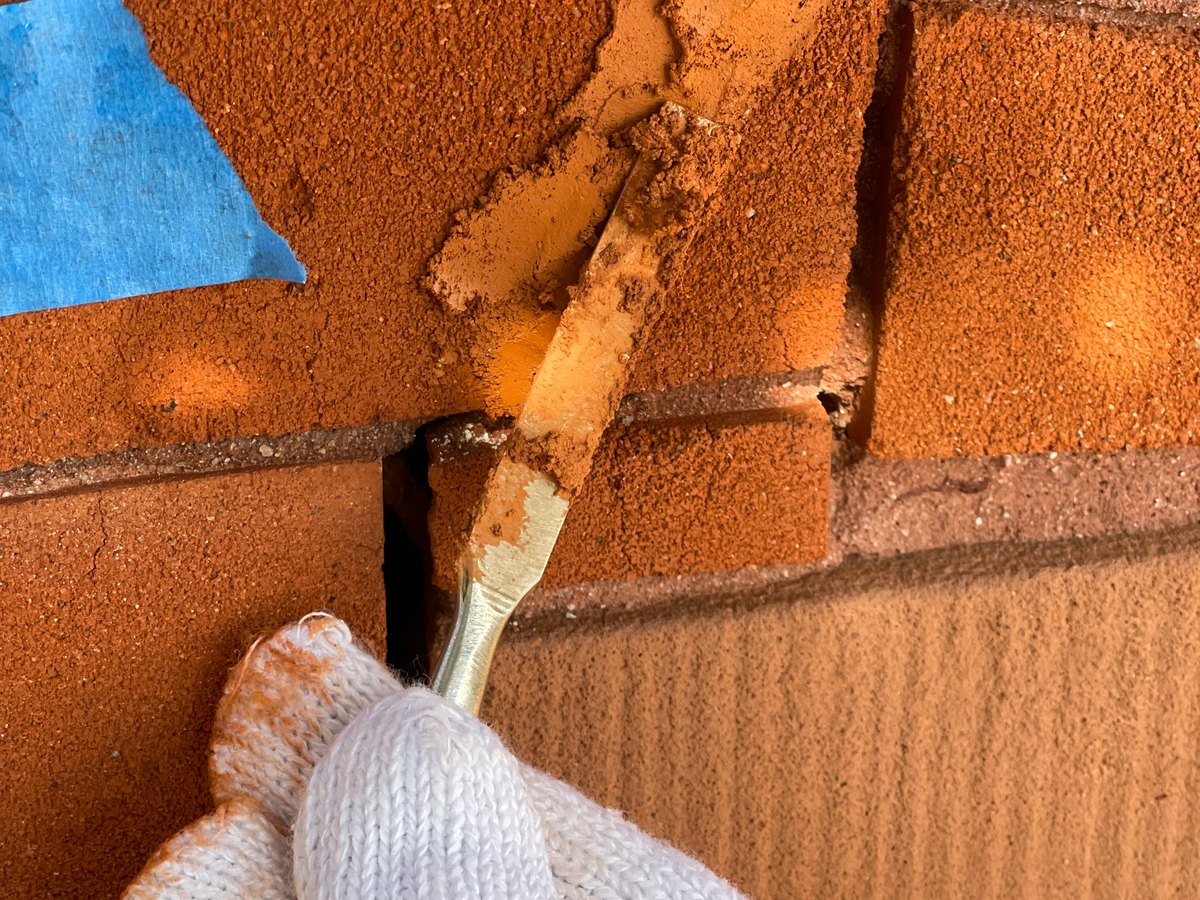
Grinding is fast. On soft historic brick, a grinder can nick and widen the edges, and that damage is permanent. Raking joints out by hand takes longer, and it keeps the brick whole.
Saving Original Brick and Stone
We salvage and work with original materials. As long as a brick or a stone is still performing, we bring it back instead of replacing it. That means more hand work: careful removal, cleaning, repair and resetting. At the Cass Mansion in Capitol Hill, we conserved all 42 original Manitou sandstone copings. Only one stone, a chimney coping with nothing original left under a failed patch, was replicated in kind. Saving takes longer than replacing. It also keeps the building authentic.
Matching Mortar and Materials
On important walls we analyze the original mortar, match its sand and color, and build sample panels to compare once they cure. At the Church of the Advent, the mortar was proven through six blended mockup colors before the repointing began. Replacement brick has to match in size, color and texture. Finding or salvaging the right units takes time.
The Lime Cure: Time Most Bids Never Include
This is where careful work and fast work part ways.
Lime mortars with no Portland cement in them do not snap hard overnight. They cure slowly, and while they cure they need tending. The process is delicate, and it takes far more time than a cement mortar. How well that cure goes decides how well the joints perform for decades.
Why the First 72 Hours Matter
The first three days are the most delicate. Fresh lime mortar that dries too fast turns chalky, bonds poorly and wears out early. Fresh lime that freezes is damaged before it has a chance. So for those first 72 hours, we nurse it. Protection often stays in place longer when the weather calls for it, and the mortar keeps gaining strength for months after that.
When It Is Cold
Lime should not go onto a cold wall, and it must not freeze while it is young. Preservation guidance generally keeps wall temperatures above about 40°F for repointing. When the nights drop, we enclose the work and bring the temperature up, then keep it steady overnight through that first 72 hours. We keep frost off for as long as the weather requires. We also make sure the heat does not dry the mortar out, because lime that is dried too fast is harmed as surely as lime that freezes.
When It Is Hot
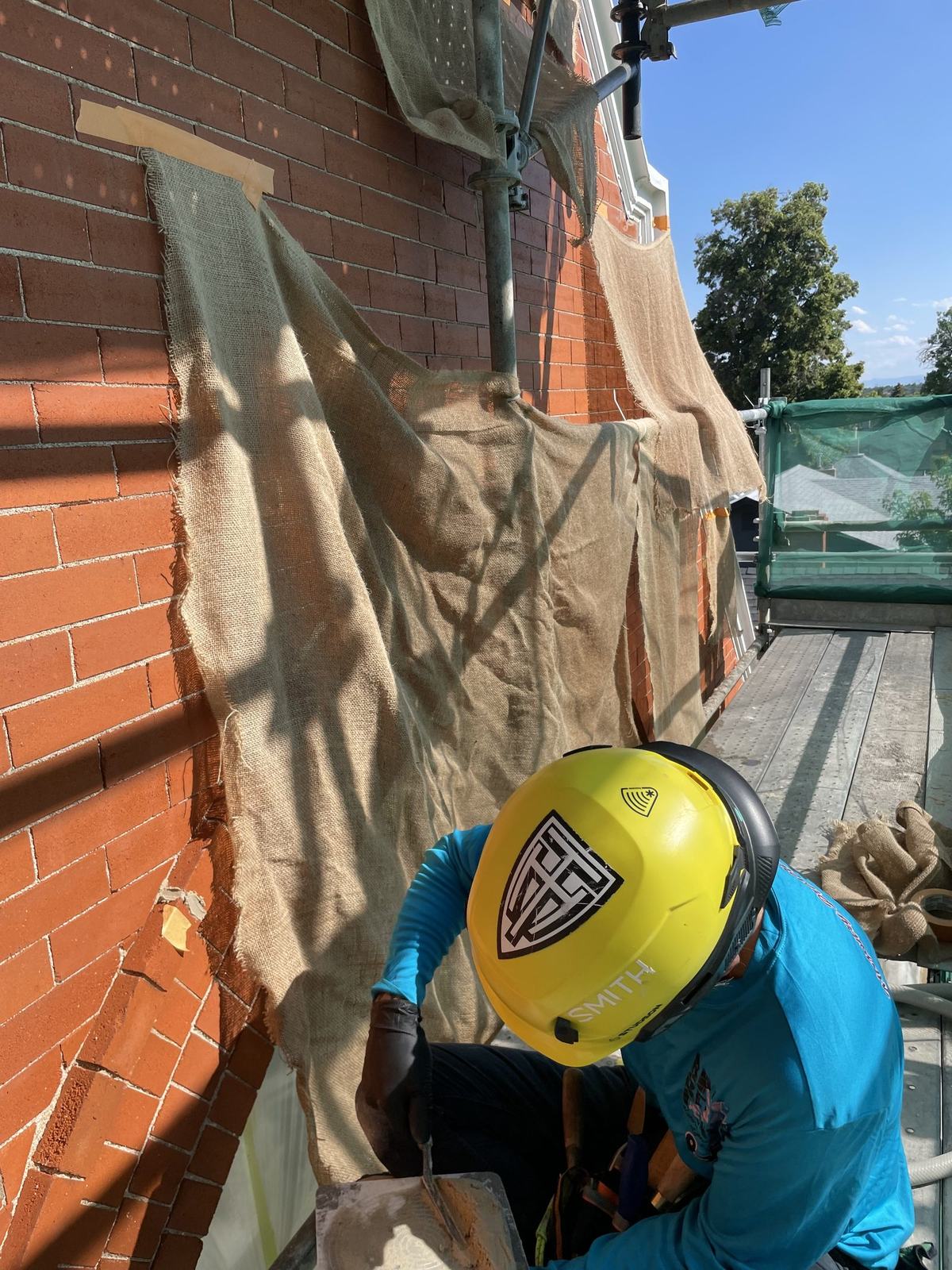
Denver's high-altitude summer sun pulls water out of mortar fast. So we work around the sun, following the shade around the building. We mist the joints as often as every hour at first. We hang damp burlap over the work and tent plastic over that, held off the face of the wall, to keep the moisture in and the sun off. We control the environment so the cure is not compromised.
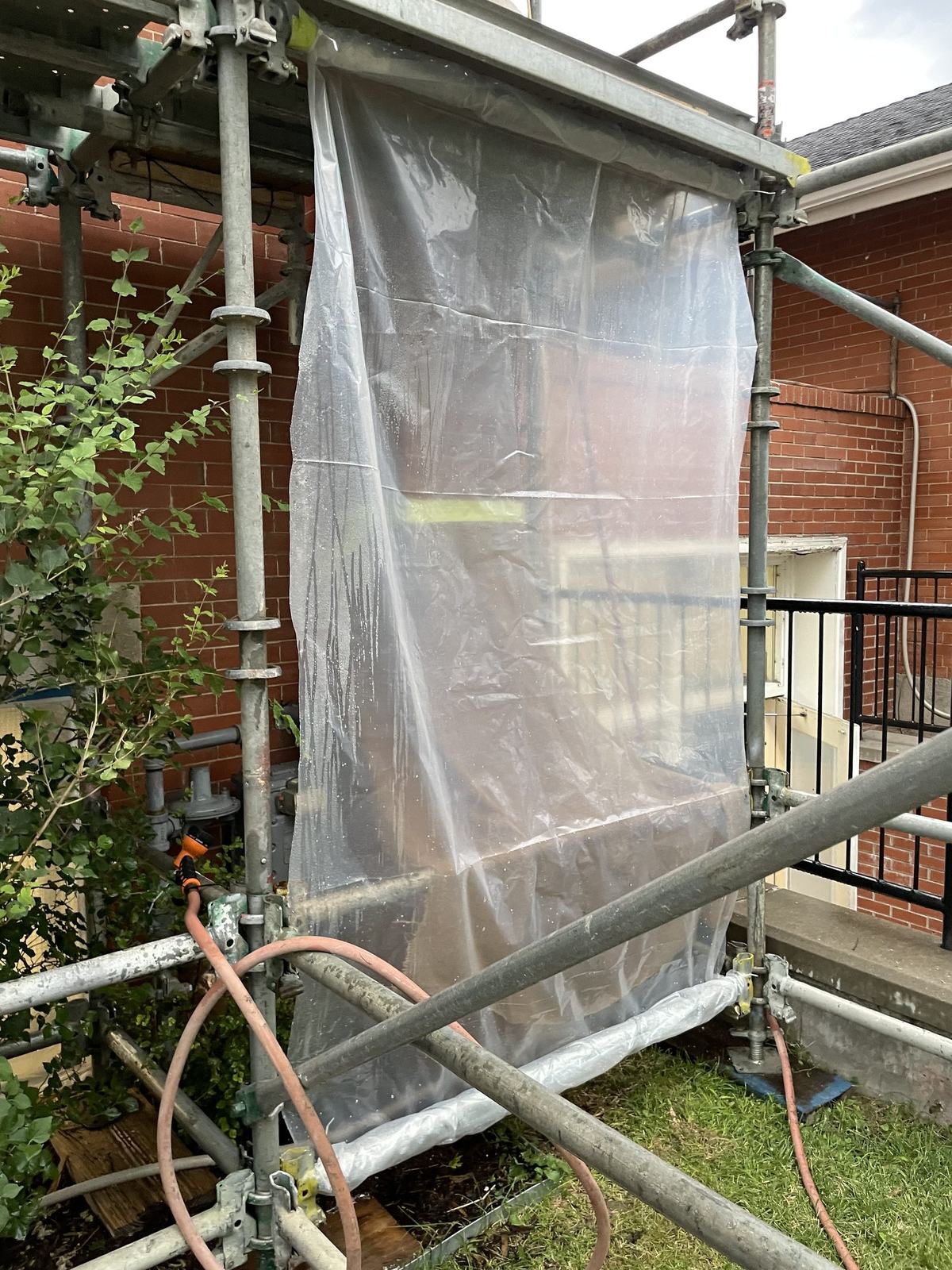
All of that is time. It is knowledge. It is knowing what the mortar needs in the moment, and doing it.
Two Different Calibers of Work
A bid that leaves all of this out will be lower. It may also put the wrong mortar in the wall. When you set that number beside ours, you are not comparing two prices for the same job. You are comparing two different calibers of work.
Season, Reviews and What We Find Inside
Weather Windows
Some lime work is better planned for milder months. Winter and midsummer work can be done well, but each needs extra protection, and that adds time.
Landmark Reviews and Documentation
Denver Landmark properties and buildings in historic districts may need design review before work starts. Grant-funded projects need test panels, documentation and approvals at each step. We plan for that time instead of pretending it is not there. See historic masonry restoration.
What We Find Once We Open It Up
Old walls keep secrets. Rusted lintels, hollow sections and past repairs often stay hidden until the mortar comes out. If we find something unexpected, we show you what we found and discuss it with you before changing the scope.
Why We Care This Much
We care about how the finished wall looks and how it performs, almost obsessively. The width of a joint. The sand in the mix. The shade of one replacement brick. The way water leaves a sill. Most people will never notice those details. We notice all of them, because the building will.
That care is not a sales line. It is how this family has worked with brick and stone since 1942.
How Do You Compare Masonry Bids Fairly?
Ask every contractor the same questions:
- What is causing the damage, and how will you stop it?
- What mortar will you use, and is it softer than my brick?
- Will you grind or hand rake the old joints?
- Which original bricks or stones will you keep, and which will you replace?
- How will you match color, sand and joint profile?
- How will you protect the new mortar while it cures, in heat and in cold?
- What is included, and what is not?
If a bid cannot answer those clearly, the price on it does not mean much yet.
How Pricing Works With Us
It starts with your photos. Send us photos. We will personally go through them with you and talk through what we are seeing, on a phone call or a Zoom call, whichever works for you. If the photos tell us enough, we will talk through what the work likely involves. If you want real answers and an exact scope, the next step is a paid site assessment and a written proposal.
We are not the fastest bid, and we are rarely the lowest. If the lowest number matters most, we may not be the right fit, and we will tell you so. If you want the work done right and done once, we would be glad to talk. Explore our brick restoration and tuckpointing and repointing services.
From Our Work in Denver
The same principles, applied on real Denver buildings.
Church of the Advent, Villa Park
A 1913 Denver Landmark restored with a State Historical Fund grant: lime repointing, mortar matching and cast stone repair.
Cass Mansion, Capitol Hill
A Denver Landmark in Capitol Hill. We conserved 42 Manitou sandstone copings and repointed the brick in lime putty mortar.
Send Us Photos and Talk It Through
Send us photos. We will personally go through them with you and talk through what we are seeing, on a phone call or a Zoom call, whichever works for you. A photo of the whole wall and a few close-ups help most. We will tell you honestly what we see and what the next step should be.
Prefer to write it all out? Use our consultation request form.
Questions Homeowners Ask
Why won't you give me a price over the phone?
A price given without seeing the wall is a guess. We do not charge for guesses, and we do not give them out. Photos let us start the conversation. A site assessment lets us be exact, so the price reflects the work your building actually needs.
Why do some masons use cement mortar if lime is better for old brick?
Cement mortar is fast, sold everywhere and cures without tending. On modern brick and block it is often the right choice. On soft historic brick it is the wrong one, because it is harder and less breathable than the brick it surrounds. We explain why in [Lime Mortar vs. Cement Mortar](/lime-mortar-vs-cement-mortar.html).
Does winter masonry work cost more?
It usually takes more time. Enclosing the work, heating it and keeping frost away through the cure all add labor and materials. Some lime work is better scheduled for spring or fall. If waiting would serve your wall better, we will tell you.
Is it cheaper to replace damaged brick than to save it?
Sometimes, on paper. But replacing loses original material, and new brick rarely matches a century-old wall in size, color and texture. We replace only the units that have truly failed and keep everything that is still performing.
Can the work be done in phases?
Often, yes. Anything letting water into the wall usually comes first, and the rest can follow in order of urgency. We will tell you whether your project can be split up sensibly.
Is a paid site assessment worth it if I only want a price?
An assessment gives you a diagnosis and a written scope, so the price you get is for the right work. It is not for everyone. If you only want a number to compare against other bids, going through your photos together may be enough to tell whether we are a fit.