
Ask three people about tuckpointing vs. repointing and you may hear three different answers. In everyday Denver use, "tuckpointing" usually means fixing worn mortar joints. Strictly speaking, that work is repointing. True tuckpointing is something older and more particular: a decorative joint that makes ordinary brick look finer than it is.
The difference matters when you hire someone. If your house has true tuckpointing, the wrong repair can erase it for good.
What Is Repointing?
Repointing is the renewal of mortar joints. The mason removes the deteriorated mortar to a sound depth, without widening the joint or chipping the brick edges, and packs new mortar back in, in layers. The finished joint is shaped to match the original profile.
The National Park Service's guidance on repointing historic brick (Preservation Brief 2) calls for removing old mortar to a depth of two to two and a half times the width of the joint, so the new mortar has a sound bed to hold onto. On soft old brick, much of that removal is done by hand.
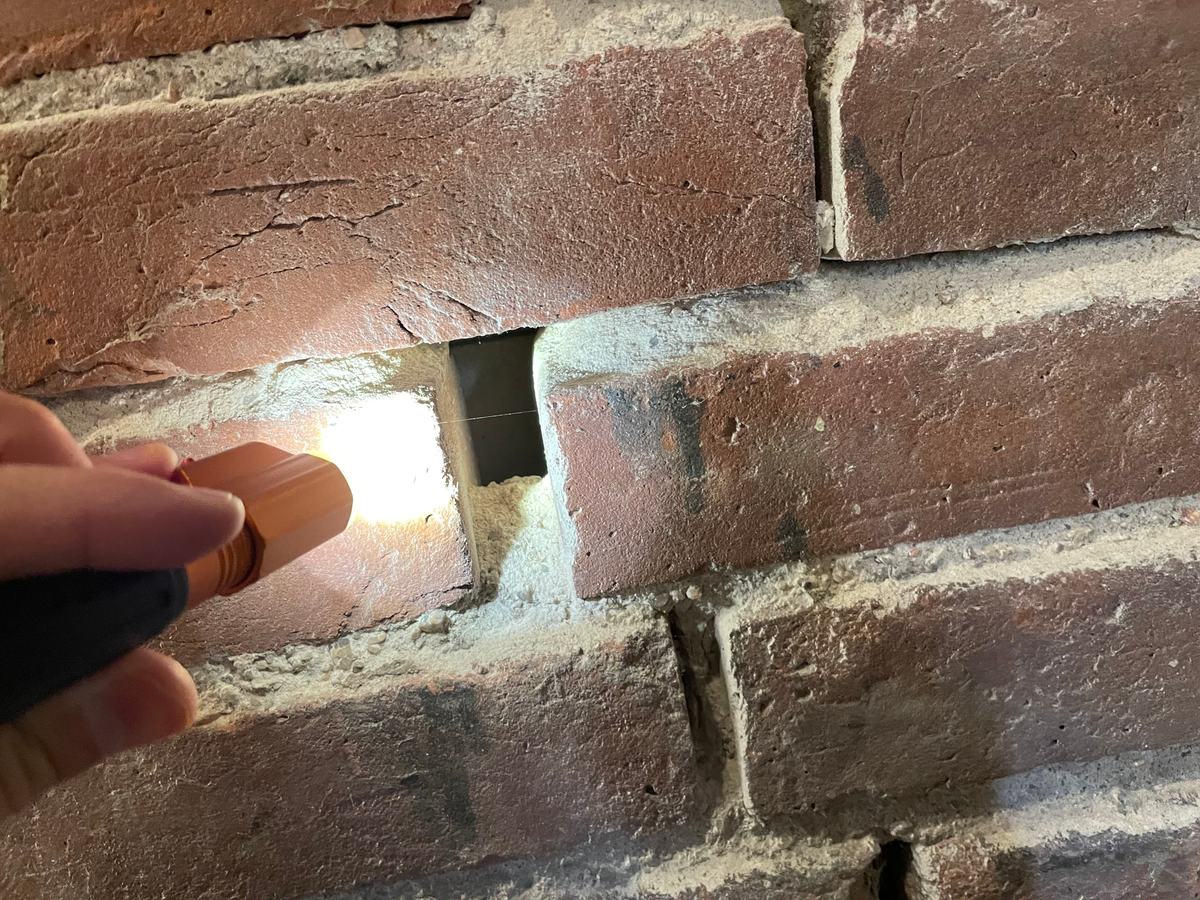
Repointing is maintenance. Done with a mortar that is softer than the brick, it protects the brick instead of competing with it, and it can last for decades.
What Is Tuckpointing?
True tuckpointing, sometimes called English or Old English tuckpointing, uses two materials in one joint. First, the joint is filled flush with a mortar tinted to blend with the brick. Then, while that mortar is still workable, the mason runs a narrow groove along the center of the joint and tucks a thin, raised ribbon of lime putty into it, often white.
From the street, the wall reads as crisp, fine joints, even where the bricks themselves are a little irregular. It was a way to make common brick look like costlier, more precise work.
Where Can You Still See True Tuckpointing in Denver?
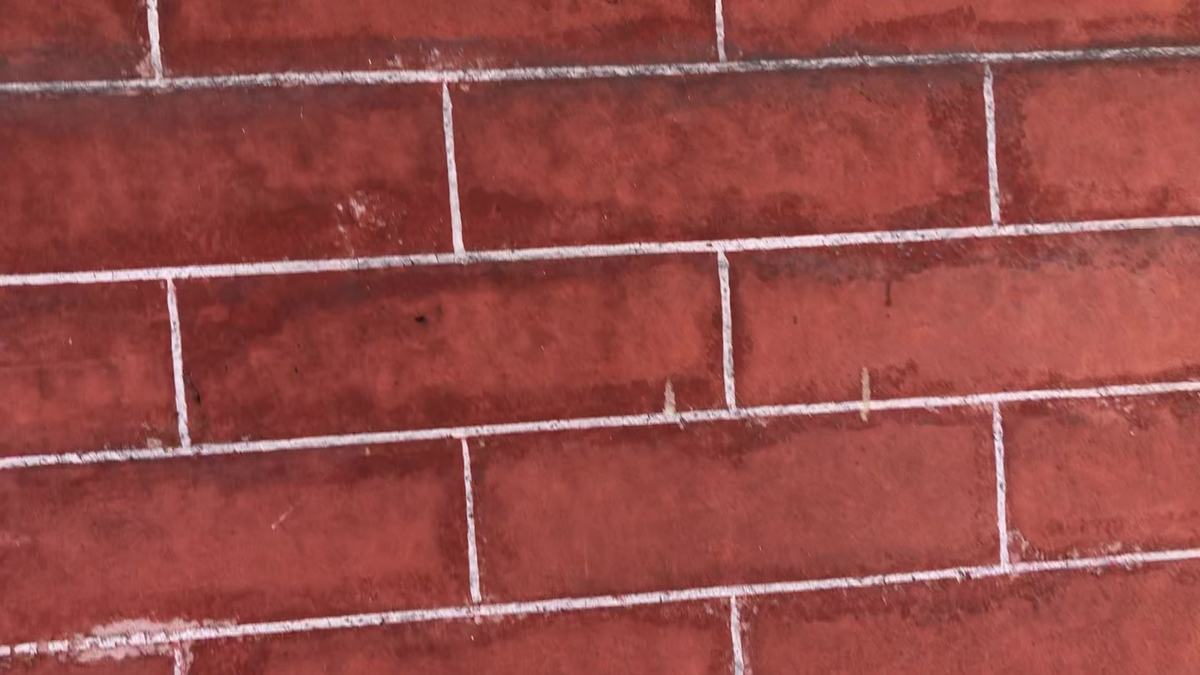
The wall at the top of this page is in Denver's Historic Baker District. Look closely and the white lines are not the mortar joints at all. They are ribbons laid over joints colored to blend with the brick. Where a ribbon has worn away, the colored joint underneath shows through.
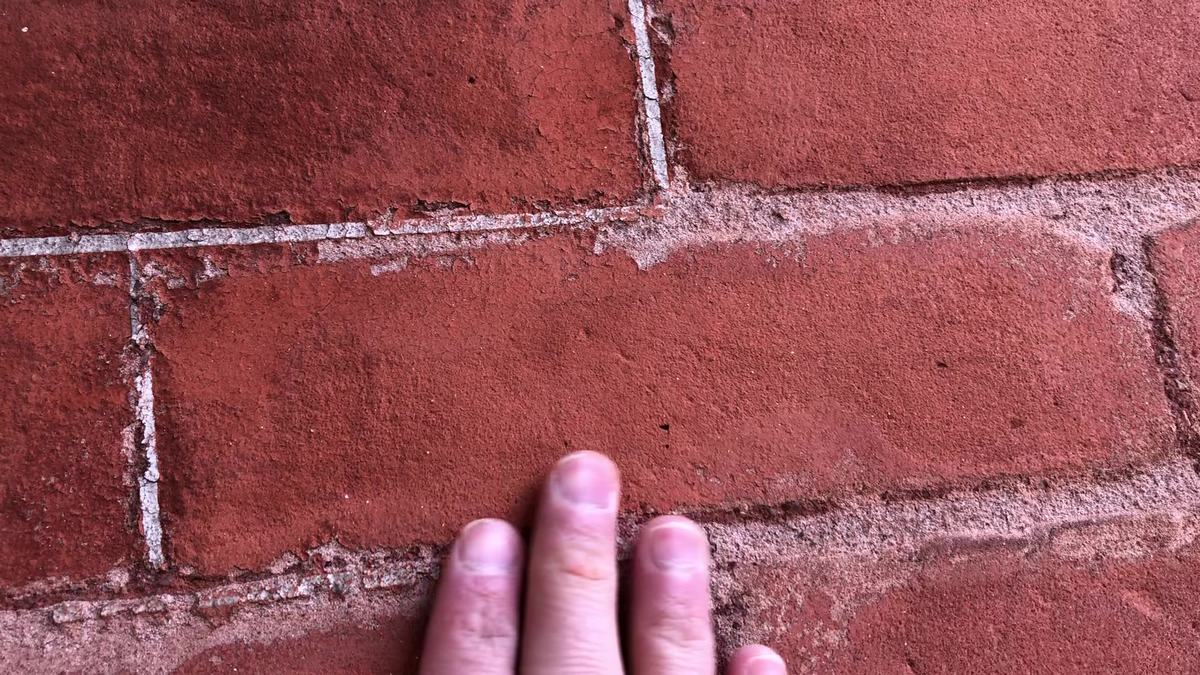
If you own an older brick house, look for joints that seem impossibly thin and white against the brick, or a white line that sits slightly proud of the surface. If the line is a separate ribbon over a reddish joint, you may have true tuckpointing. Take a photo before anyone touches it.
Tuckpointing vs. Repointing: Side by Side
- Purpose. Repointing renews worn joints. True tuckpointing is a decorative finish.
- What you see. A repointed joint is one mortar, shaped to the original profile. A tuckpointed joint is two materials: a flush, colored joint and a raised ribbon.
- When it is needed. Repointing, when mortar is soft, sandy, cracked or recessed. Tuckpointing work, when an original tuckpointed wall is being repaired.
- What can go wrong. A rushed repointing job widens joints and chips brick edges. On a tuckpointed wall, plain gray mortar wipes out the design.
Lime Putty Repointing: The Joint Itself Is the Finish
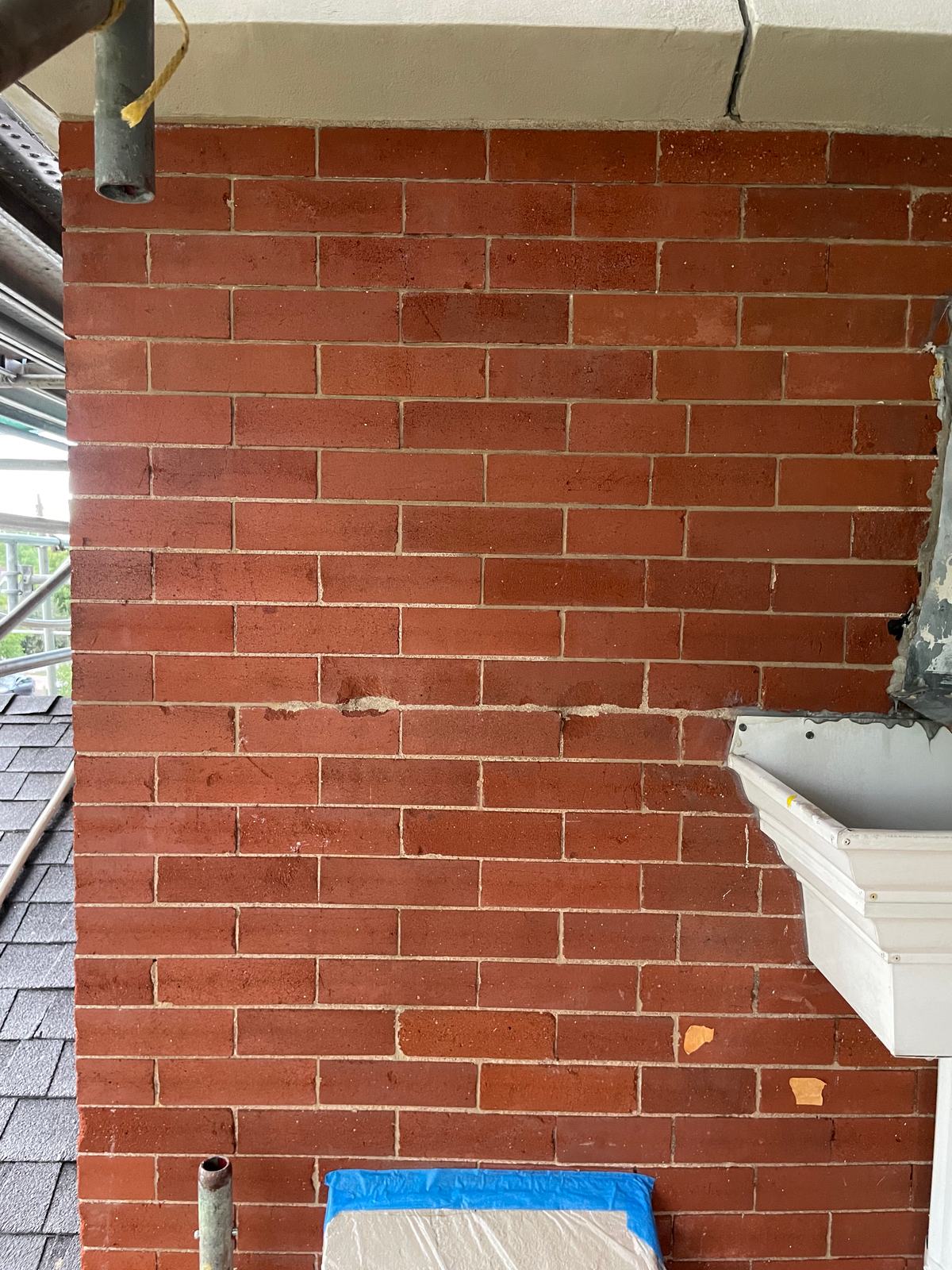
Most old brick in Denver was never tuckpointed. Its joints were simply laid and struck in lime mortar, and renewing them is repointing. Below, the joints were repointed in lime putty mortar and finished smooth and flush with the face, a buttered joint with no separate ribbon. The joint itself is the finish.
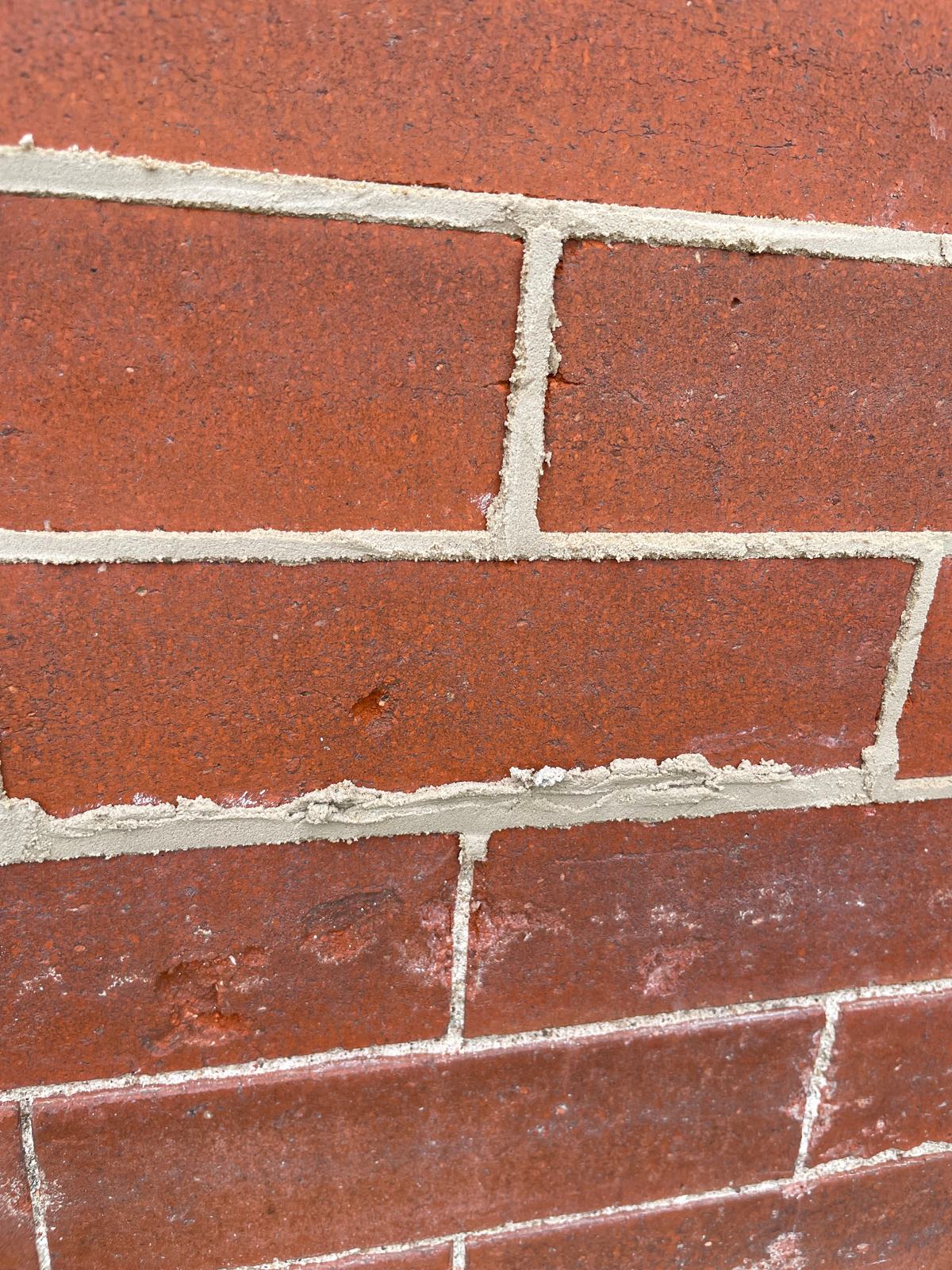
Lime putty mortar asks for patience. It stiffens slowly, it has to be packed in thin layers, and it needs to be kept damp and protected while it cures. In return, it stays softer and more breathable than the brick around it, which is what an old wall needs.
Why the Difference Matters for Your House
- Thin joints can be ruined in an afternoon. An angle grinder run down a joint that was laid thin can widen it and round off the brick edges. Once the edges are gone, the fine joint cannot come back.
- A tuckpointed wall can lose its design. Filling a tuckpointed wall with plain gray mortar erases what made it distinctive.
- Hard mortar hurts soft brick. A cement mortar that is harder than the brick pushes stress and moisture into the brick. Over time the brick, not the joint, takes the damage. See Lime Mortar vs. Cement Mortar.
How Do We Approach Repointing and Tuckpointing?
Read the Wall First
Before any mortar comes out, we look at the joint width, the profile, the color and texture of the original mortar and how the brick is wearing. If a wall has true tuckpointing, we document it before anything is touched and plan the repair so its character is kept.
Remove Old Mortar Gently
We take out deteriorated mortar to a sound depth, by hand where the brick is soft or the joints are thin, without widening the joint or chipping the brick.
Match the Mortar
Where it matters, we analyze the original mortar. We match the sand, the color and the joint profile, and we build test panels and let them cure before the wall is repointed. The mortar is always softer than the brick.
Give It a Proper Cure
Lime mortar is kept damp and shaded while it cures, and protected from cold. That time is part of the work. Read more in our tuckpointing cost guide.
From Our Work in Denver
The same principles, applied on real Denver buildings.
Cass Mansion, Capitol Hill
A Denver Landmark in Capitol Hill. We conserved 42 Manitou sandstone copings and repointed the brick in lime putty mortar.
Church of the Advent, Villa Park
A 1913 Denver Landmark restored with a State Historical Fund grant: lime repointing, mortar matching and cast stone repair.
Questions to Ask Anyone Who Will Repoint Your Brick
- Will you remove the old mortar by hand, with a grinder or both, and how will you protect the brick edges?
- How deep will you go, and how will the new joint match the width and profile of the old one?
- What mortar will you use, and why is it softer than my brick?
- How will you match the color and sand?
- If my wall has tuckpointing, how will you protect or restore it?
Send Us Photos and Talk It Through
Not sure whether your house has true tuckpointing, or what your joints need? Send us photos. We will personally go through them with you and talk through what we are seeing, on a phone call or a Zoom call, whichever works for you. A photo of the whole wall and a few close-ups of the joints help most.
Prefer to write it all out? Use our consultation request form.
Questions Homeowners Ask
What is tuckpointing?
In everyday use, "tuckpointing" usually means renewing worn mortar joints, which is properly called repointing. True tuckpointing is a historic decorative joint: a flush joint colored to blend with the brick, with a thin raised ribbon of lime putty, often white, laid along its center.
Is tuckpointing the same as repointing?
Not strictly. Repointing removes deteriorated mortar and replaces it with new mortar shaped to the original profile. True tuckpointing is a decorative finish with two materials in one joint. Many people use the words interchangeably, so it is worth asking any contractor exactly what they plan to do.
How long does repointing last?
It depends on the mortar, the wall and how much water the wall sees. Repointing done with a compatible mortar, on a wall that is kept dry, can last for decades. Hard cement mortar on soft brick can fail much sooner and damage the brick around it.
How often should a building be tuckpointed?
There is no fixed schedule. Lime mortar is meant to wear slowly and sacrificially, so joints are renewed when they become soft, sandy, cracked or recessed. The areas that get the most water, such as chimneys, parapets and the base of walls, usually need it first.
How can I tell if my house has true tuckpointing?
Look for very thin, crisp white lines that sit slightly proud of the brick, laid over joints colored to blend with the brick. Where the ribbon has worn away, you will see the colored joint underneath. Photograph it before any work starts and ask your mason how they plan to keep it.
Can I repoint brick myself?
Small areas can be done carefully, but the most common mistakes are hard to undo: a joint widened by a grinder, brick edges chipped, or a cement mortar harder than the brick. On older Denver brick, talk it through with a mason before you start.